
Quick answer
The sitar is the most recognisable instrument of North Indian Hindustani classical music. With between 18 and 21 strings — some visible, some hidden beneath the bridge — it produces an unmistakable sound: deep, bright and full of overtones. George Harrison brought it to the Beatles. Ravi Shankar brought it to the world. Here is its full story.
What is the sitar? History and origin
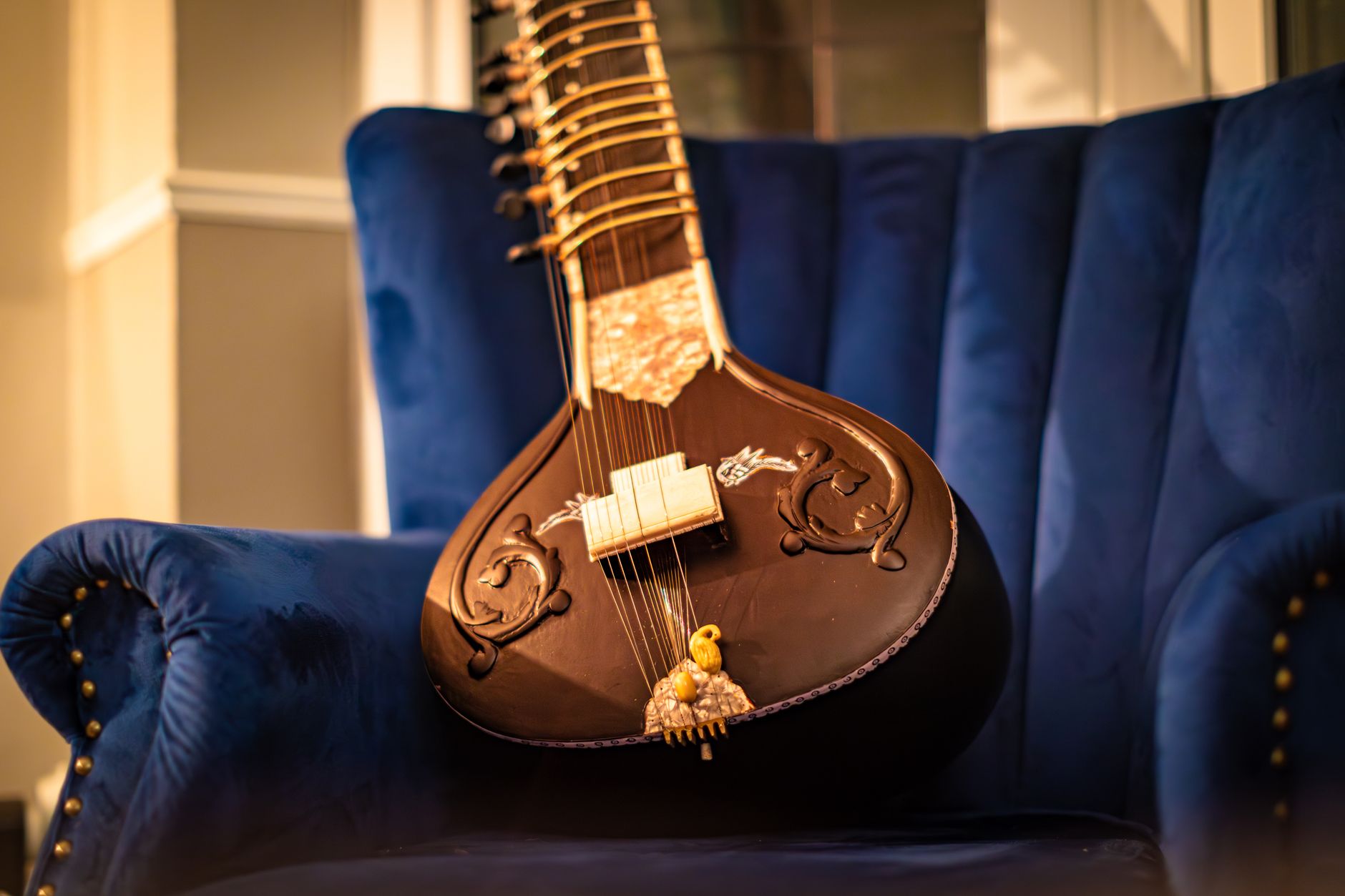
The sitar (sitār in Hindi) is a plucked string instrument of the lute family. Its name comes from the Persian se tār (three strings), although today's models have between 18 and 21. It emerged in northern India during the 13th century, influenced by the ancient Indian veena and the Persian lute brought by the Mughals.
For centuries the sitar was a court instrument, reserved for elite musicians trained under the guru-shishya (teacher-disciple) tradition. There were no written scores: all the music was passed down orally, generation after generation, like a sacred secret.
The instrument's Western breakthrough came in 1965, when George Harrison heard Ravi Shankar during the filming of Help! and was captivated. Months later, the sitar appeared on the Beatles' “Norwegian Wood”. The hippie counterculture adopted the instrument as a symbol of Eastern spirituality, and Ravi Shankar became the first Indian musician with a mass audience in the West.
How the sitar is built
The body of a traditional sitar has these parts:
- Gourd (tumba): The lower resonating chamber, carved from a large dried gourd. Some concert sitars have a second gourd at the top of the neck.
- Neck (dand): Long and hollow, made of teak or rosewood, where the frets sit.
- Frets (parda): 19-20 curved, movable brass frets, tied on with thread. Being curved lets you produce the characteristic glissandi (meend) by pulling the string sideways.
- Main strings (kharaj and jod): 6-7 steel or brass strings running over the upper bridge (jawari). They produce the melody and the drones.
- Sympathetic strings (tarab): 11-13 thinner strings that pass under the bridge and vibrate by resonance, adding the ethereal shimmer that sets the sitar apart from other lutes.
How it works: sitar technique
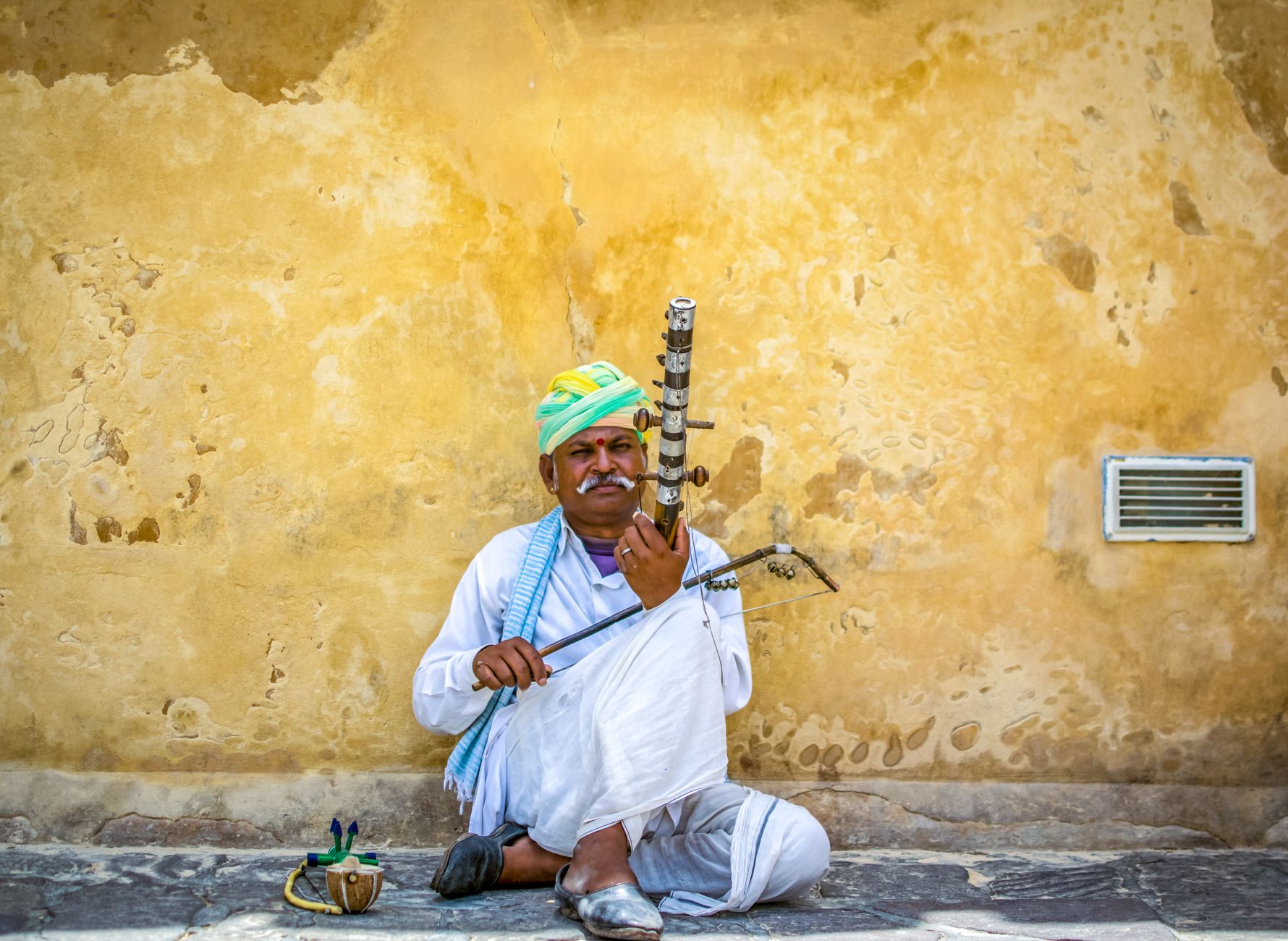
The sitarist sits cross-legged on the floor, resting the gourd on the left ankle and holding the neck almost horizontal. On the right index finger they wear the mizrab, a hook-shaped wire plectrum used to pluck the strings with two basic strokes: da (inward) and ra (outward).
The left hand presses the strings against the frets and performs the sitar's most distinctive move: the meend, a glissando achieved by pulling the string sideways across the curved fret, bending the pitch up or down by as much as two and a half tones without lifting the finger. This ornament is the instrument's sonic signature.
The most demanding technique is mastering the jawari: the shape of the bridge carving that gives the sitar its buzzing, nasal timbre. A luthier spends hours adjusting the jawari to the player's preference.
Ragas: the heart of sitar music
The sitar is not played from Western sheet music. Its language is ragas, melodic frameworks of Hindustani classical music that define:
- The notes that may be used (and the forbidden ones)
- The ascending (aroha) and descending (avaroha) sequence
- The emphasised notes and characteristic ornaments
- The mood (rasa): serenity, love, heroism, terror…
- The time of day or season it should be played in
Over 200 ragas are documented, though sitarists usually master 30-50 deeply over a lifetime. A traditional performance opens with the alap (a free, rhythm-free exploration of the raga), followed by the jor (adding pulse) and the jhala (a rhythmic crescendo), culminating in the gat, a fixed composition interwoven with the improvisation of the accompanying tabla player.
Types of sitar
There are two main sitar families, differing in string count and playing style:
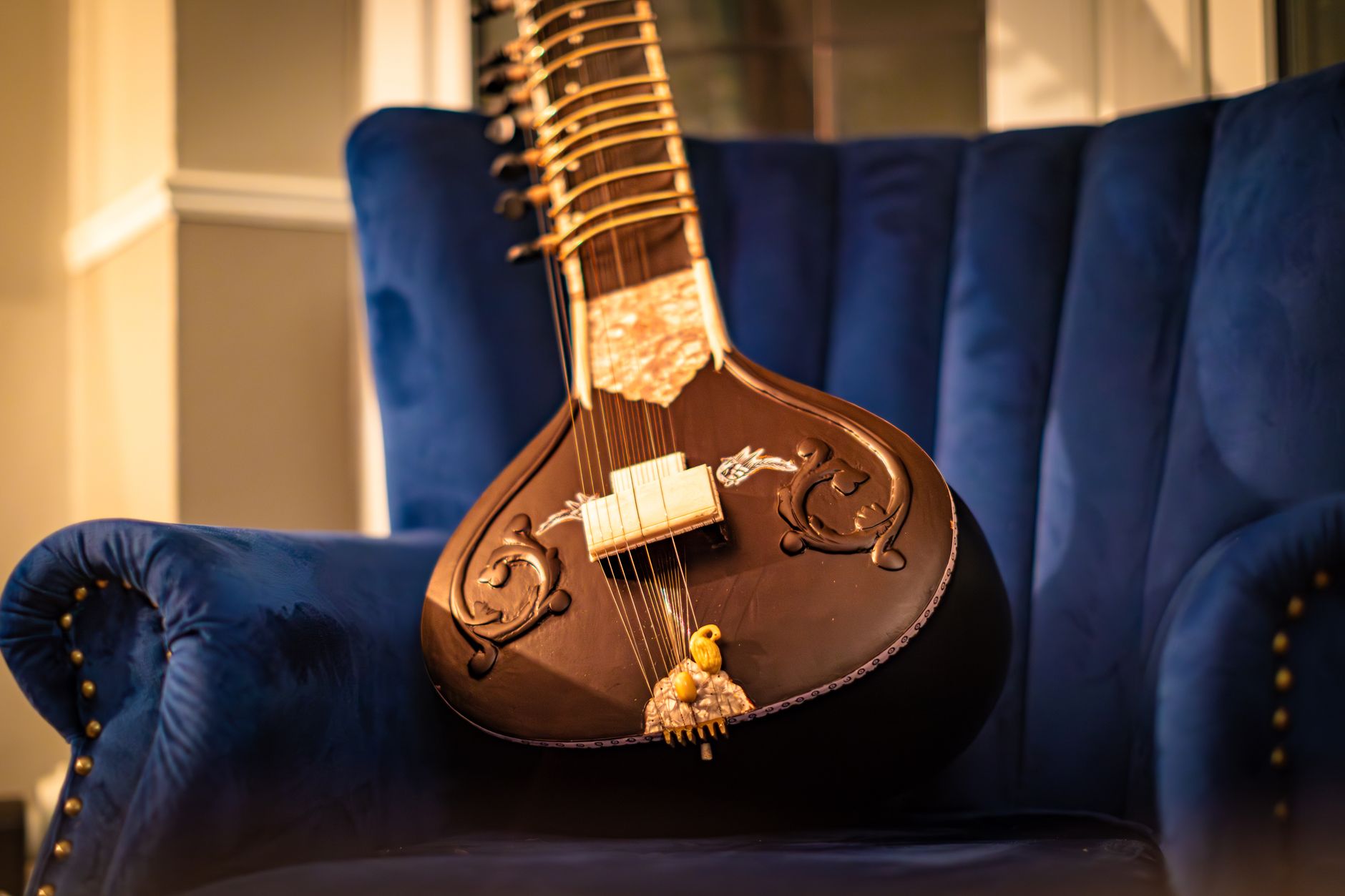
- Ravi Shankar sitar (Imdadkhani): The most popular internationally. It has 7 main strings and 13 sympathetic strings, with two gourds. Favoured in the Maihar gharana style.
- Vilayat Khan sitar (gayaki ang): Designed to imitate the human voice. It has fewer sympathetic strings (9-11) and lower frets. Favoured by vocally influenced musicians such as Shahid Parvez.
For beginners, the Ravi Shankar style is the standard at most schools and what you'll find in entry-level models on the market.
The sitar in Western and new-age music
Beyond the Beatles, the sitar has left its mark on Western music across several movements:
- Psychedelic rock (1966-1970): the Rolling Stones (“Paint It Black”), the Doors, Brian Jones… the sitar became synonymous with expanded consciousness.
- New age and ambient: the sitar's continuous drone and nocturnal ragas fit perfectly with meditation, relaxation and yoga music.
- World music: from Peter Gabriel to Anoushka Shankar fusing jazz, flamenco and Indian classical.
- Film: Bollywood soundtracks and Western films seeking an Eastern atmosphere (Indiana Jones, the 1967 Jungle Book).
Today artists such as Anoushka Shankar, Niladri Kumar and Shahid Parvez keep the sitar at the forefront of classical and global fusion music.
How to learn sitar: a beginner's guide
Learning the sitar is a long-term commitment, but the first results arrive sooner than you'd think:
- Weeks 1-4: Correct posture, placing the mizrab, stringing and tuning. First da-ra exercises (paltas) on the main strings.
- Months 2-3: First simple raga (Yaman or Bhairavi are common for beginners). Basic meend exercises.
- Months 4-6: First gat (fixed composition) in teentaal (16-beat cycle). Coordination with tabla or a metronome.
- Year 1-2: Mastery of the alap, two-tone meend, ornaments such as gamak and krintan. First public performance possible.
The most effective way to learn is with a sitar guru or teacher. Online platforms such as Udemy and YouTube offer basic courses, though without the real-time posture correction only an in-person teacher can give.
Comparison: best sitars to buy
| Model | Approx. price | Level | Features |
|---|---|---|---|
| Remo Shankar Student 19F | €200-280 | Beginner | 19 frets, teak, 7+11 strings, case included. Good factory tuning. |
| Hiren Roy Standard | €350-450 | Intermediate | Rosewood, better-quality steel strings, finer jawari. Classic Kolkata brand. |
| Atlas Student Sitar | €180-230 | Beginner | Affordable entry option. Good for the first 1-2 years. May need jawari adjustment. |
| Kanai Lal Concert Grade | €700-1,200 | Advanced | Individually handcrafted. For musicians with 3+ years of experience. |
As an affiliate, Otamatone.club may earn a small commission on qualifying purchases at no extra cost to you.
Frequently asked questions about the sitar
What is the sitar?
A plucked string instrument from India with between 18 and 21 strings (7 main and 11-13 sympathetic). It is the most representative instrument of North Indian Hindustani classical music.
How many strings does a sitar have?
Between 18 and 21 in total: 6-7 main strings played with the mizrab and 11-13 sympathetic strings (tarab) that vibrate by resonance, giving the sound its characteristic shimmer.
Is the sitar hard to play?
It has a steep learning curve. Posture, the mizrab and mastering the meend take months. Simple first ragas can be learnt in 3-6 months with regular lessons.
What is a raga?
A melodic framework in Indian classical music that defines the allowed notes, the mood and the time of day it should be played. It's not a fixed scale but a rule system for improvisation.
What's the difference between sitar and tanpura?
The sitar is the main melodic instrument. The tanpura is the accompanying instrument that provides the continuous drone, with only 4 strings and no melodic role.
Who is Ravi Shankar?
Ravi Shankar (1920-2012) was the most influential sitar player of the 20th century. He brought Indian classical music to the West, collaborated with George Harrison of the Beatles and won three Grammys.
Which sitar should a beginner buy?
Look for a student sitar with 19 frets, teak or rosewood, around €150-300. Brands like Remo Shankar, Hiren Roy or Atlas are good options. Avoid sitars under €100.
What is the mizrab?
The hook-shaped metal plectrum a sitarist wears on the right index finger, used to pluck strings with da (inward) and ra (outward) strokes.
How did the sitar influence Western music?
George Harrison introduced it into the Beatles ("Norwegian Wood", 1965; "Within You Without You", 1967). Since then it has appeared in world music, ambient, new age and film scores.