

What is a kalimba?
The kalimba, also known as the thumb piano or western mbira, is an idiophone percussion instrument of African origin. It consists of a series of metal tines of different lengths mounted on a wooden resonance box or flat board. To play it, the musician holds the instrument with both hands and plucks the tines with the thumbs. Each tine produces a different note according to its length: longer tines give lower notes, shorter ones give higher notes. The result is a sweet, crystalline, relaxing sound similar to a music box.
The kalimba belongs to the family of lamellaphones (plucked idiophones), along with the mbira, marimbula and sanza. Its ease of learning makes it one of the most recommended instruments for people with no prior musical experience, including children.
History and origin
Metal-tined instruments have existed in Africa for over 3,000 years. The mbira, the kalimba's direct ancestor, is sacred in the Shona culture of Zimbabwe and is used in religious ceremonies called bira. The modern kalimba was designed in the 1950s by British ethnomusicologist Hugh Tracey, who standardised the diatonic C-major tuning to make it accessible to Western markets. He trademarked the name "kalimba" (from a Bantu language), and it has since become one of the best-selling instruments in the world. Today, brands like Gecko, Moozica, Hluru and Hokema produce high-quality kalimbas in different materials and configurations, priced from $20 to $150.
Types of kalimba: which should you choose?
By number of keys (tines)
- 8 keys: Mini portable version, one octave. Good for travel and young children. Limited for full songs.
- 10 keys: Slightly more complete but still limited. Ideal as a taster gift.
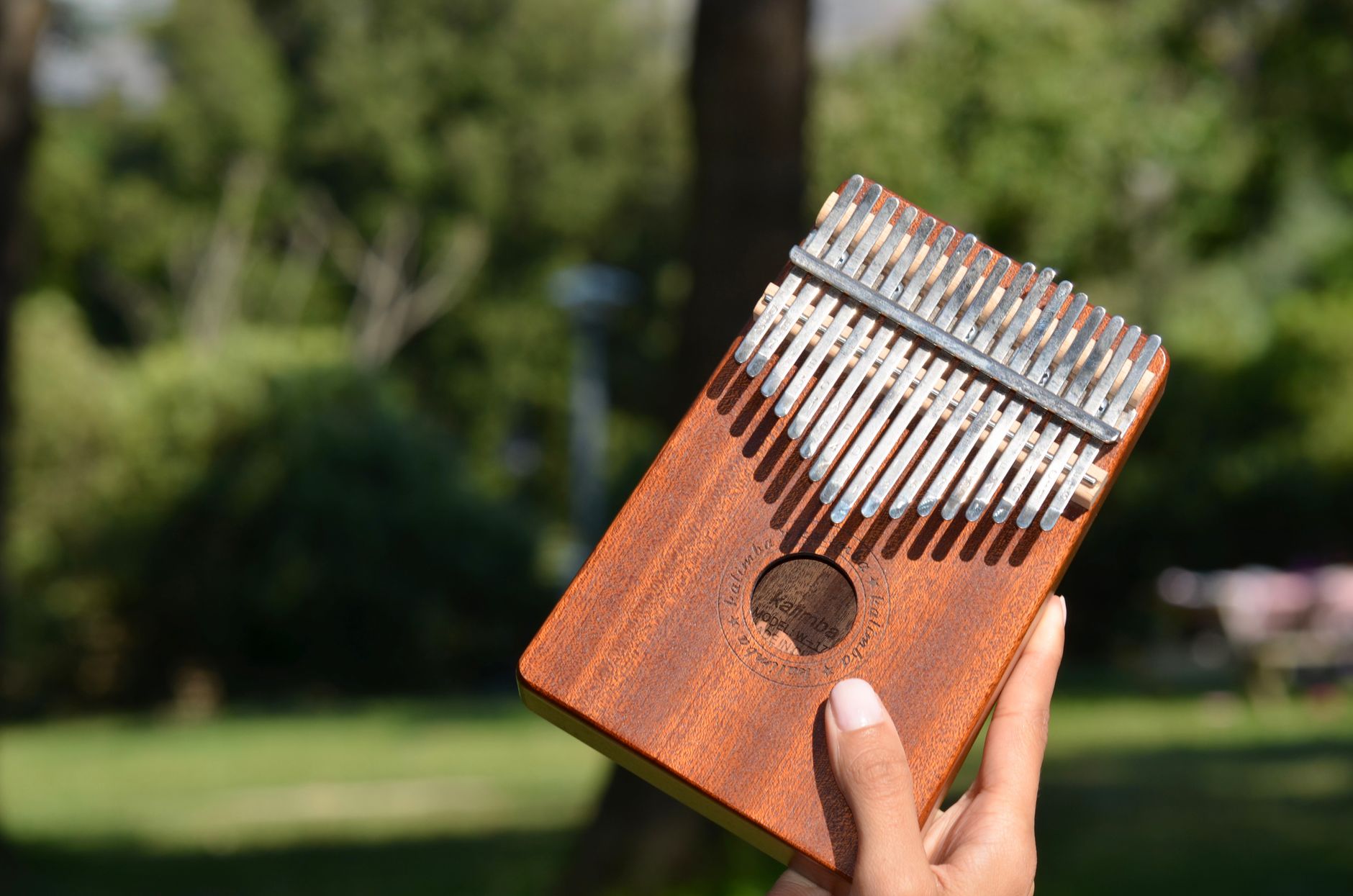
- 17 keys: The universal standard. Two octaves in C major, enough for 90%% of popular songs. Recommended for beginners.
- 21 keys: Extends the range with extra chromatic notes. For musicians who want more versatility.
- 34 chromatic keys: Full instrument with all notes. For experienced musicians only.
By body material
- Solid wood (acacia, mahogany, walnut): The best material for sound. Warm, resonant and durable. Recommended.
- Plywood: Budget-friendly but less rich sound. Fine for getting started on a tight budget.
- Acrylic / transparent: Brighter, more metallic sound, very attractive look. Slightly less warm than solid wood.
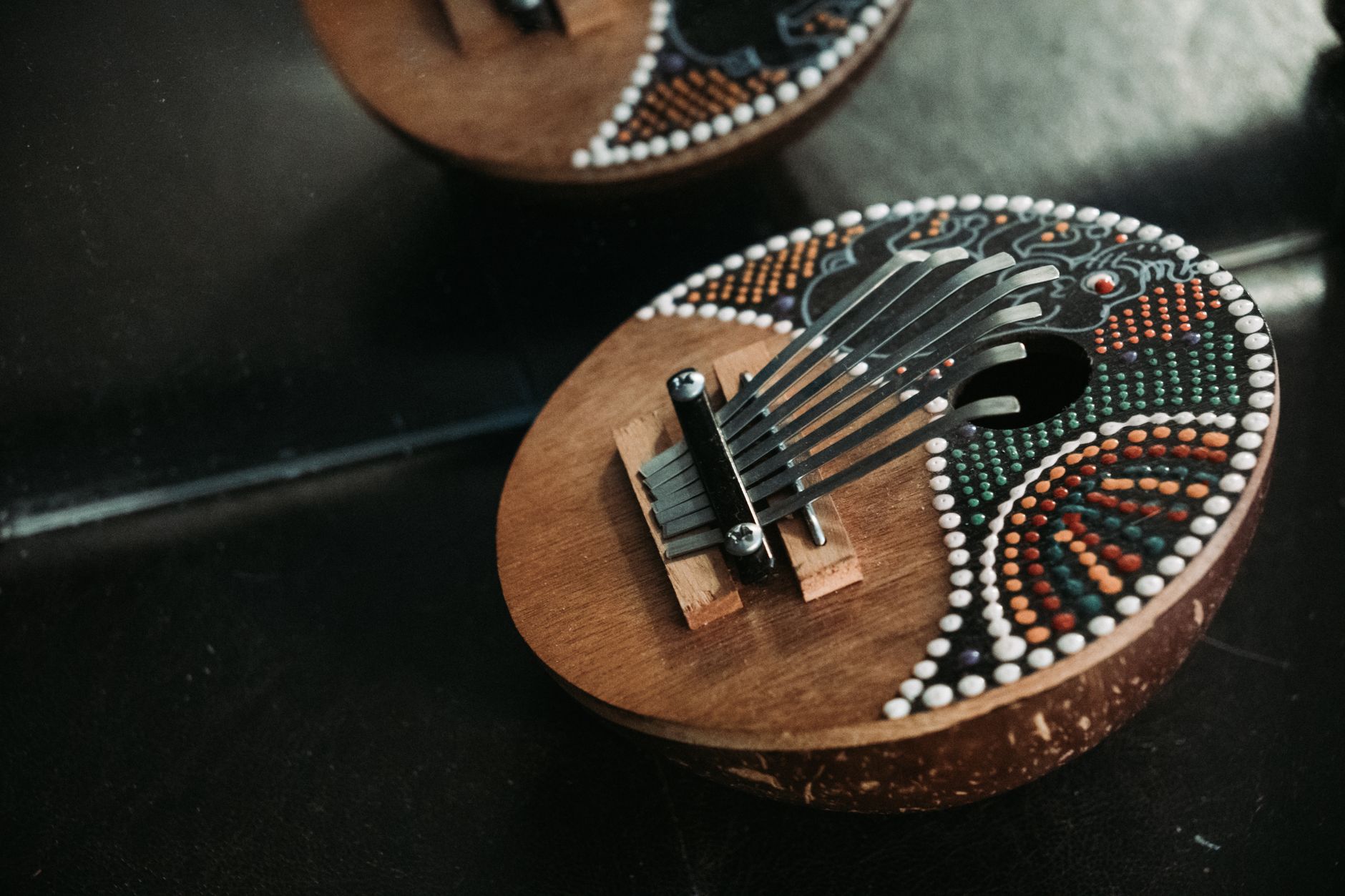
- Coconut shell: Natural resonance box with an organic sound. Very original aesthetics.
How to play the kalimba
Hold the kalimba with both hands: thumbs in front, the other fingers at the back supporting the box. The longer tines (bass) are in the centre and the shorter ones (treble) at the outer edges, alternating left-right. Press a tine with the tip of your thumb and let it slide gently forward. No need to press hard: a light touch produces the best sound with more sustain.
Beginner tip: Tines come numbered (1–17) on most models. Kalimba tabs use these numbers, so you can play songs without reading music — just follow the numbers in order.
Comparison: 6 best kalimba models 2026
| Model | Keys | Material | Type | Level | Approx. price |
|---|---|---|---|---|---|
| Gecko K17K | 17 | Solid mahogany | Hollow box | Beginner | ~$22 |
| Hluru ACCU 17 | 17 | Solid acacia | Hollow box | Beginner | ~$28 |
| Moozica K17K | 17 | Solid walnut | Hollow box | Beginner-Intermediate | ~$35 |
| Crystal acrylic 17 | 17 | Transparent acrylic | Hollow box | Beginner | ~$30 |
| LingTing K21W | 21 | Solid wood | Hollow box | Intermediate | ~$45 |
| Hokema Sansula B9 | 9 | Wood + membrane | Frame drum | Intermediate | ~$95 |
Approximate prices on Amazon.com — June 2026. May vary.
See kalimbas on Amazon →Amazon.com link — no affiliate tag.
Buying guide: 8 criteria not to get wrong
- Number of keys. A 17-key C major kalimba is the universal starting point. Covers 90%% of songs and all online tutorials. Only consider 21+ keys if you already have musical experience.
- Body material. Solid wood (acacia, mahogany, walnut) produces the warmest, most resonant sound. Avoid plywood if your budget allows. Acrylic sounds good but is brighter and less deep.
- Hollow box vs. flat board. Hollow-body (box) kalimbas project sound better and are more comfortable unplugged. Board-type ones can be inserted into external resonators but sound drier alone.
- Rear sound holes. Many models have holes at the back. Covering and uncovering them while playing produces a very expressive vibrato effect — highly desirable on mid-range models.
- Tine quality. The best kalimbas use manganese steel with anti-corrosion treatment. Cheap ones rust quickly and lose tuning. Check that the manufacturer specifies the steel type.
- Included accessories. A good kalimba should include: tuning hammer (essential), note stickers for the tines, protective bag, and optionally a song book or QR code for online tutorials.
- Brand and warranty. The most reliable brands on Amazon are Gecko, Moozica, Hluru and LingTing. All offer at least a 1-year warranty and after-sales support.
- Budget. Between $20 and $40 you find excellent beginner solid-wood kalimbas. Below $15 quality drops dramatically. If you have $40–$80, premium-wood intermediate models are the best investment.
Easy songs to start with the kalimba
A 17-key C major kalimba lets you play hundreds of well-known songs without reading sheet music, using simple number tabs:
- Twinkle Twinkle Little Star — Very easy. Central notes only, perfect for learning tine layout.
- Happy Birthday — Very easy. Familiar rhythm and simple notes. First song every beginner should play.
- Let It Be — The Beatles — Easy. Emotional melody, well distributed across the kalimba range.
- River Flows in You (Yiruma) — Intermediate. The kalimba anthem. Very satisfying once you get it.
- Despacito (intro) — Easy. Adapts perfectly to the 17-key kalimba.
- Can't Help Falling in Love — Easy. Simple Elvis classic that sounds spectacular on kalimba.
- The Last of Us (main theme) — Intermediate. Beautiful adaptation of Joel and Ellie's theme.
- Somewhere Over the Rainbow — Intermediate. Timeless classic working octave jumps.
- Bella Ciao — Easy. Very popular, notes in a comfortable range.
- Fur Elise (opening) — Intermediate. The first bars are manageable and incredibly rewarding.
Tip: Search YouTube for "[song name] kalimba tutorial tabs" to find free tabs for almost any song. There are also active communities on Reddit and Facebook sharing tabs daily.
Frequently asked questions
What is a kalimba?
The kalimba, also called thumb piano, is an African percussion instrument with metal tines of different lengths mounted on a wooden resonance box. Played by plucking the tines with the thumbs, it produces a sweet, crystalline, relaxing sound.
How many keys does the most popular kalimba have?
The most popular model has 17 keys in C major — two full octaves, enough for 90%% of popular songs and all beginner tutorials.
Is the kalimba hard to learn?
No. One of the world's easiest instruments. Tines come numbered; you can play your first melody in under 10 minutes following a basic tab.
Which kalimba to buy in 2026?
A 17-key solid wood (mahogany, acacia or walnut) kalimba from Gecko, Moozica or Hluru, priced $20–$40. The Gecko K17K is the most recommended beginner model.
What is the difference between kalimba and mbira?
The mbira is the original Shona instrument from Zimbabwe — 22-28 tines in three registers, sacred ceremonial use. The kalimba is a modernised Western version with 8–17 tines in a single row, designed by Hugh Tracey in the 1950s for accessibility.
Does the kalimba need tuning?
Yes, though it is very stable. Use the included hammer: tap a tine upward to raise the pitch, downward to lower it. With normal use you rarely need to tune it.
How much does a good kalimba cost?
A quality beginner model costs $20–40. Intermediate models $45–80. Professional ones can exceed $100. Avoid anything below $15 — quality is unreliable.
What songs can I play with a 17-key kalimba?
Hundreds: Twinkle Twinkle, Happy Birthday, Let It Be, River Flows in You, The Last of Us, Somewhere Over the Rainbow, Bella Ciao, Can't Help Falling in Love and many more.