
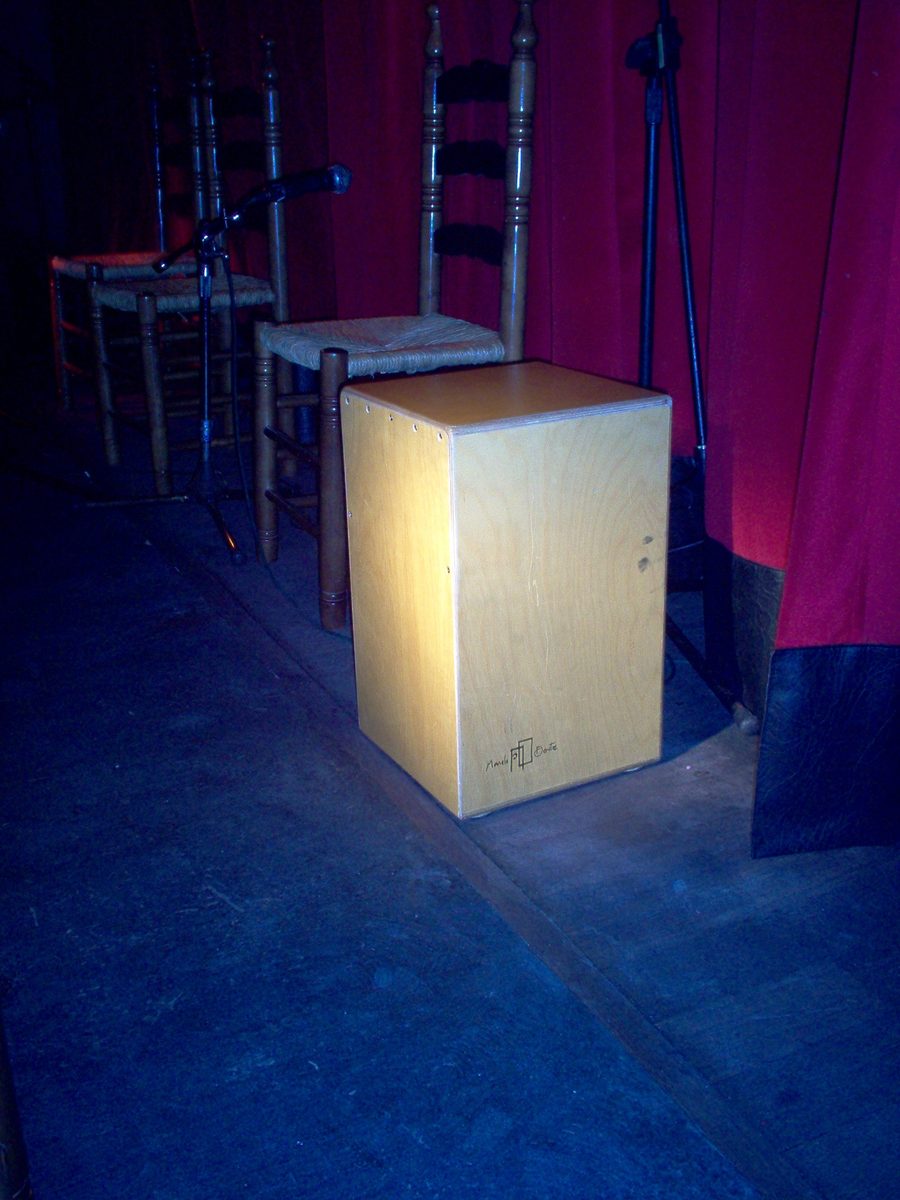
What is a cajón?
The cajón (spelled "cajon" in English) is literally a box: a percussion instrument in the shape of a hollow wooden cube that the musician sits on to play, striking the front face with both hands. That front panel — thinner than the rest — is called the tapa de golpe (strike face) and produces the sound. Inside, snares (strings or metal springs) vibrate and give that characteristic sharp crack.
What is brilliant about the cajón is that with a single instrument you get two drum sounds: a deep bass thud (like a kick drum) when you strike the centre, and a sharp crack (like a snare) when you strike the upper corner. That is why it has become the rhythmic backbone of modern flamenco — rumba, bulerías, tangos, sevillanas — and the favourite accompaniment for a guitar around a campfire.
It is portable, needs no sticks, no amplification, and you can learn it fast: the perfect combination for anyone wanting to start playing percussion without knowing music.
From Peru to flamenco thanks to Paco de Lucía
Although we call it "flamenco cajón", its cradle is on the other side of the Atlantic. The cajón was born in 19th-century Peru, created by Afro-Peruvian slaves who, with drums forbidden, began percussing on wooden fruit and cargo crates. That gave birth to the Peruvian cajón, with a dry, clean sound.
The leap to Spain has a date and a name: in 1977, during a tour of Peru, guitarist Paco de Lucía was captivated by the instrument, bought it and brought it to his group. His percussionist, Rubem Dantas, added guitar strings inside — the snares — to give it that metallic crack. The flamenco cajón was born, and within a few years it had become indispensable in flamenco and spread through pop, folk and street music worldwide.
With snares or without: the key decision
| Type | Sound | Best for |
|---|---|---|
| Flamenco cajón (with snares) | Bass + sharp snare-like crack | Flamenco, rumba, pop, campfire — the most common choice |
| Peruvian cajón (without snares) | Dry and clean, no crack | Afro-Peruvian music, jazz, pure percussion |
| Cajón with adjustable snares | Both: activate/deactivate snares | Those who want versatility in one box |
For the vast majority starting out, the answer is a flamenco cajón with snares — that is the sound we associate with handclaps, guitar and parties. If in doubt, look for one with adjustable snares and you get both worlds.
How to play the cajón step by step
The best part about the cajón: on your very first day you can play a rhythm. Here is how to start:
- Sit on top. Place the cajón between your legs with the strike face pointing forward and tilt it slightly back. Your own weight holds it and leaves both hands free.
- The bass stroke. Strike with the full palm and fingers together in the centre of the face and let the hand bounce. A deep, round sound comes out: that is the kick drum, the pulse-keeper.
- The treble stroke. Strike with only the fingertips in the upper corner, close to the edge. The snares vibrate and produce a sharp crack: that is the snare. Do not press — let the fingers bounce.
- Combine: the basic beat. Alternate bass and treble in four beats: bass–treble–bass–treble. The famous boom-chak-boom-chak. Repeat slowly until it sounds even: that is already music.
- Your first flamenco pattern. With the basic beat mastered, try a rumba or sevillanas pattern following a tutorial. Keep bass and treble clean and maintain the pulse. Within days you will be accompanying real songs.
The classic beginner mistake is striking with a stiff arm and tense hand: you need to let the hand bounce naturally, like a ball. And you do not need to hit hard: good sound comes from the bounce, not from a dead stop.
Common mistakes and how to fix them
| Problem | Cause | Fix |
|---|---|---|
| Bass and treble sound the same | Striking in the same zone | Bass = palm in centre; treble = fingertips in upper corner |
| Sound is muffled and hand hurts | Stiff hand, no bounce | Let the hand bounce naturally, loose wrist |
| Snares buzz or rattle too much | Snares loose or misadjusted | Adjust the snare tension screws |
| Getting tired quickly | Forced posture, hunched back | Sit straight, cajón between legs, tilted back slightly |
| Losing the rhythm in bulerías | 12-beat cycle is complex | Start with rumba (4 beats) and build up gradually |
Cajón vs other easy instruments
| Cajón | Tongue drum | Handpan | |
|---|---|---|---|
| Family | Percussion (box) | Melodic percussion | Melodic percussion |
| How played | Seated, hand strikes | Strike tines with fingers/mallets | Strike zones with hands |
| Produces melody | No, rhythm only | Yes (notes) | Yes (notes) |
| Initial difficulty | Very low | Very low | Low-medium |
| Starting price | Medium | Low | High |
If you want to keep the beat and back up other players, the cajón is unbeatable. If you want relaxing melodies by hand, look at the tongue drum or handpan.
Which to buy to start
For starting from scratch, a wooden flamenco cajón with snares, standard adult size (around 19 inches / 48–50 cm tall) from a recognised brand. Avoid overly cheap toy-like models: they sound cardboard-thin. The tapa de golpe (the face you strike) is the single biggest influence on sound quality.
Frequently asked questions
Is the cajón flamenco or Peruvian?
Born in Peru in the 19th century and brought to flamenco in 1977 by Paco de Lucía. The Peruvian cajón has no snares (dry sound); the flamenco one does (sharp crack), thanks to an idea by percussionist Rubem Dantas.
Is the cajón hard to play?
One of the easiest percussion instruments. On day one you get bass and treble and a four-beat rhythm. No music reading required. Speed and bulerías take more time.
With snares or without?
For flamenco, rumba and pop: with snares (snare-drum-like crack). Without snares (Peruvian style) sounds drier. Best for beginners: adjustable snares giving both sounds.
Can I play it without knowing music?
Absolutely. The cajón is learned by imitation and rhythmic feel. Mastering the bass stroke and the treble stroke and keeping time with a song is all you need to start.
What size cajón should I buy?
Standard adult: around 19 inches (48–50 cm) tall. Children's cajónes in smaller sizes exist. The quality of the strike face matters more than the size.