
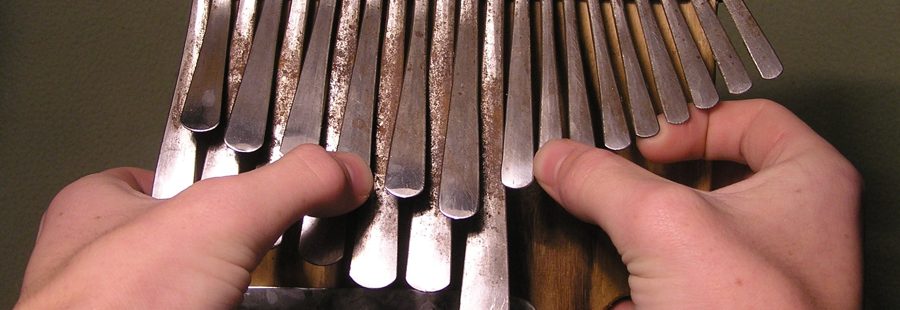
What is the mbira?
The mbira is a metal-tined instrument — technically a lamellaphone — originating from the Shona people of Zimbabwe, where it is considered the national instrument and has been part of UNESCO's Intangible Cultural Heritage since 2020. It consists of a wooden board (gwariva) on which 22 to 28 forged metal tines are fixed, arranged in three registers and plucked with the thumbs and index finger. The sound is deep, metallic, hypnotic: somewhere between a music box and a handpan, with an intentional buzzing produced by bottle-caps or shells attached to the board.
Do not confuse the mbira with the kalimba: the kalimba is a modernised, simplified version designed for the Western market. The mbira dzavadzimu is the original instrument, with over 1,000 years of tradition, polyrhythmic and tied to the bira ceremonies of communication with ancestral spirits (vadzimu).
History: a thousand years of ancestral voices
The earliest mbiras we know date back over 3,000 years in sub-Saharan Africa, though the dzavadzimu model played in Zimbabwe today dates from about 1,000 years ago. The name dzavadzimu literally means "voice of the ancestors" in Shona. The instrument reached Europe through explorers and ethnomusicologists in the 19th century. In the 1960s, American ethnomusicologist Hugh Tracey popularised a simplified version he renamed kalimba for easier commercialisation — giving rise to the 8- and 17-note kalimbas flooding Amazon today, which are direct descendants of the mbira but a different instrument in complexity and use. In 2020, UNESCO recognised "the art of making and playing the mbira" as Intangible Cultural Heritage of Humanity.
Technical specifications
| Feature | Mbira dzavadzimu | Kalimba (Western version) |
|---|---|---|
| Number of tines | 22 – 28 | 8, 10, 17 or 21 |
| Registers | 3 (lower-left, upper-left, right) | 1 (single row) |
| Tine material | Forged steel (traditional: iron) | Stainless steel |
| Resonance body | Mukwa/rosewood board + gourd (deze) | Wood or acrylic body |
| Popular tunings | Nyamaropa, Gandanga/Mavembe | C major, G major |
| Traditional accessories | Bottle-caps/shells (buzzers), gourd deze | Decorative board |
| Approximate price | $100 – $400 | $20 – $80 |
How to play the mbira
- Grip: Hold the mbira with both hands, four fingers of each hand wrapping around the sides and back. The right little finger goes into the hole at the lower-right corner to stabilise the instrument.
- Thumb position: Both thumbs rest on the tines, ready to pluck downward and outward. The right index finger also engages the upper registers.
- Plucking: Press the tine with the thumb tip and let it slide gently forward. The sound should be clean and resonant; if it squeaks, you are pressing too hard.
- Cyclic patterns: Mbira music is based on repeating 12-beat cycles. Patterns overlap to create the illusion of multiple simultaneous melodies — a phenomenon called hocketing.
- The gourd (deze): In ceremonial context, the mbira is inserted into a gourd resonator that amplifies volume and adds the buzzing of attached metal caps.
At home, starting with a 17-note kalimba is the ideal gateway: same thumb mechanics, without the complexity of three registers.
Video: technique in action
Mbira technique tutorial by Rhythm In Africa: hand position, tine plucking and first rhythmic patterns.
Types and lamellaphone family
| Instrument | Notes | Origin / Use | Who for |
|---|---|---|---|
| Mbira dzavadzimu | 22 – 28 | Zimbabwe / Shona ceremonies | Committed musicians |
| Karimba | 15 – 17 | Zimbabwe / transitional version | Intermediate |
| Kalimba 17 notes | 17 | Western / meditation and hobby | Beginners |
| Kalimba 8–10 notes | 8 – 10 | Western / children and therapy | Children and music therapy |
| Sanza / sansa | Varies | Central Africa (Congo, Angola) | Collectors |
Mbira vs kalimba: key differences
| Mbira dzavadzimu | Kalimba 17 notes | |
|---|---|---|
| Tines | 22 – 28, in 3 registers | 17, in 1 row |
| Learning curve | Moderate–high | Very low |
| Sound | Complex, polyphonic, with buzzing | Melodic, clear, sweet |
| Context | Ceremonial, spiritual, world music | Meditation, hobby, viral on TikTok |
| Price | $100 – $400 | $20 – $80 |
| Availability | Specialist luthiers / African music shops | Amazon, general stores |
Practical rule: if you want to start right now with no effort, get a kalimba. If you are drawn to Shona tradition, polyphony and a lifelong instrument, invest in a real mbira.
What the mbira sounds like
The mbira dzavadzimu sound is hard to describe without hearing it: metallic yet warm, percussive yet melodic, with an intentional buzzing from the bottle-caps or shells attached to the board. That buzz is not a flaw — it is an essential part of the timbre. Mbira music is built in 12-beat cycles that repeat and overlap, creating the illusion of multiple simultaneous voices: one of history's earliest explorations of polyphony. Unlike the Western kalimba, which sounds like a music box and is ideal for simple melodies, the mbira dzavadzimu creates hypnotic, dense, deeply relaxing patterns that explain its use in hours-long trance ceremonies.
Mbira in contemporary music
The mbira has transcended its ceremonial context to influence very different genres. Zimbabwean musician Thomas Mapfumo popularised chimurenga, a style fusing mbira with electric guitar. Pianists and ambient/world-music artists have used its patterns as a foundation. In the digital world, the characteristic mbira buzz appears in African video-game soundtracks and in YouTube meditation music with millions of plays.
Care and maintenance
- Tines: Keep them dry and rust-free. If months pass without playing, a drop of machine oil at the root protects them.
- Tuning: Adjusted by pushing the tine inward (raises pitch) or outward (lowers it). Use a coin or flat screwdriver. Screw-type models are more stable than wire-type.
- Wood: Avoid extreme humidity; once a year, a light coat of teak oil protects the board.
- Gourd (deze): If using one, check it has no cracks that would affect resonance.
What to buy on Amazon
To get started, a 17-note kalimba is the best first step: same thumb mechanics, accessible price and thousands of YouTube tutorials. The most reliable Amazon brands are Donner, Gecko and Hluru. If you already have experience and want a more-noted artisan mbira, filter for "mbira 22 notes" or search for Zimbabwe luthiers directly.
See kalimbas and mbiras on Amazon →
Amazon.com link — no affiliate tag.
Frequently asked questions
What is the difference between mbira and kalimba?
The mbira is the traditional Shona instrument from Zimbabwe — 22–28 tines in three registers, complex ceremonial sound. The kalimba is a modernised Western version with 8–17 tines in a single row, designed by Hugh Tracey in the 1950s for Western markets.
Is the mbira hard to play?
The mbira dzavadzimu has a moderate learning curve: basic patterns are learned in days, but mastering traditional polyrhythmic cycles takes years. The kalimba (simplified version) is much more accessible to start with.
How much does a mbira cost?
A basic 17-key kalimba: $20–40. A quality artisan dzavadzimu from Zimbabwe: $100–400. Below $80 for traditional mbiras, quality is usually poor.
What is the mbira used for?
Originally played in bira ceremonies to communicate with ancestral spirits (vadzimu). Today: meditative music, world music, music therapy and personal relaxation.
What is a lamellaphone?
The family of instruments including mbira, kalimba and sanza, which work by vibrating metal or reed tines fixed to a resonance board, plucked with the thumbs.
How many notes does the mbira dzavadzimu have?
22 to 28 tines across three registers: at least 6 notes in the lower-left, 6 in the upper-left and 8–9 on the right.
Where to buy an authentic mbira?
For a starter kalimba, Amazon is the most accessible option (Donner, Gecko, Hluru). For an artisan dzavadzimu, look for Zimbabwe luthiers or specialist African percussion shops. Avoid unbranded models below $80 if you want a real traditional instrument.