
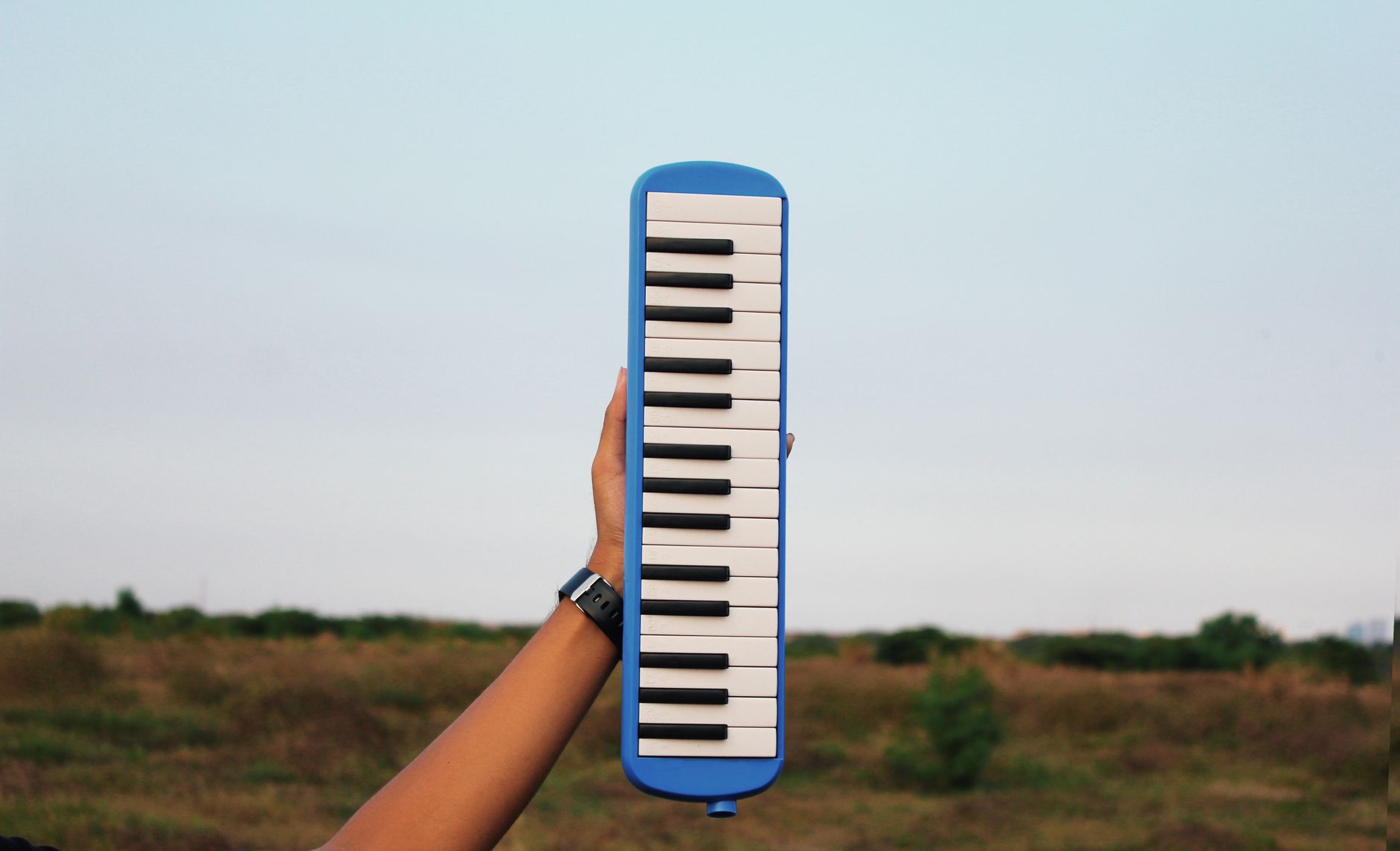
What is a melodica?
The melodica — also called melodion (Suzuki) or pianica (Yamaha) — is a wind keyboard instrument: a small piano that sounds when you blow through a mouthpiece while pressing keys. Inside it works with free reeds, the same principle as the harmonica or accordion, but the left hand does not pump a bellows: the air comes from your breath. The result is a warm, sweet and very expressive sound, capable of going from a whisper to a bright tone simply by controlling how hard you blow. It is one of the easiest, cheapest and most portable instruments to start making real music, which is why it appears in schools, jazz, reggae, indie pop and film scores.
Origin: from the classroom to the stage
The modern melodica was born around 1958 at Hohner, in Germany, as an educational instrument to teach music to children affordably. That schoolroom vocation explains why millions of people remember it from class. It soon jumped from the classroom to the stage: Jamaican musician Augustus Pablo made it an iconic sound of dub and reggae in the 1970s, and since then jazz artists like Jon Batiste and bands like Gorillaz have used it. Today it lives in two worlds: the $20 educational toy and the professional concert-quality versions.
How to play it
Playing the melodica combines something almost everyone already knows — a piano keyboard — with one new gesture: blowing. Hold the instrument with your left hand (or rest it on a table with the long tube), press keys with your right hand as on a piano, and blow steadily. The note sounds while you hold the key and keep blowing; stopping air silences it, allowing you to phrase and articulate just like a wind instrument. The key to sounding good is breath control: a soft blow gives a sweet tone; a stronger one raises the volume and adds brightness. You do not need to read music to start: since the keys are identical to a piano, any keyboard tutorial or sheet music works, and there are letter-tab charts to play songs within minutes.
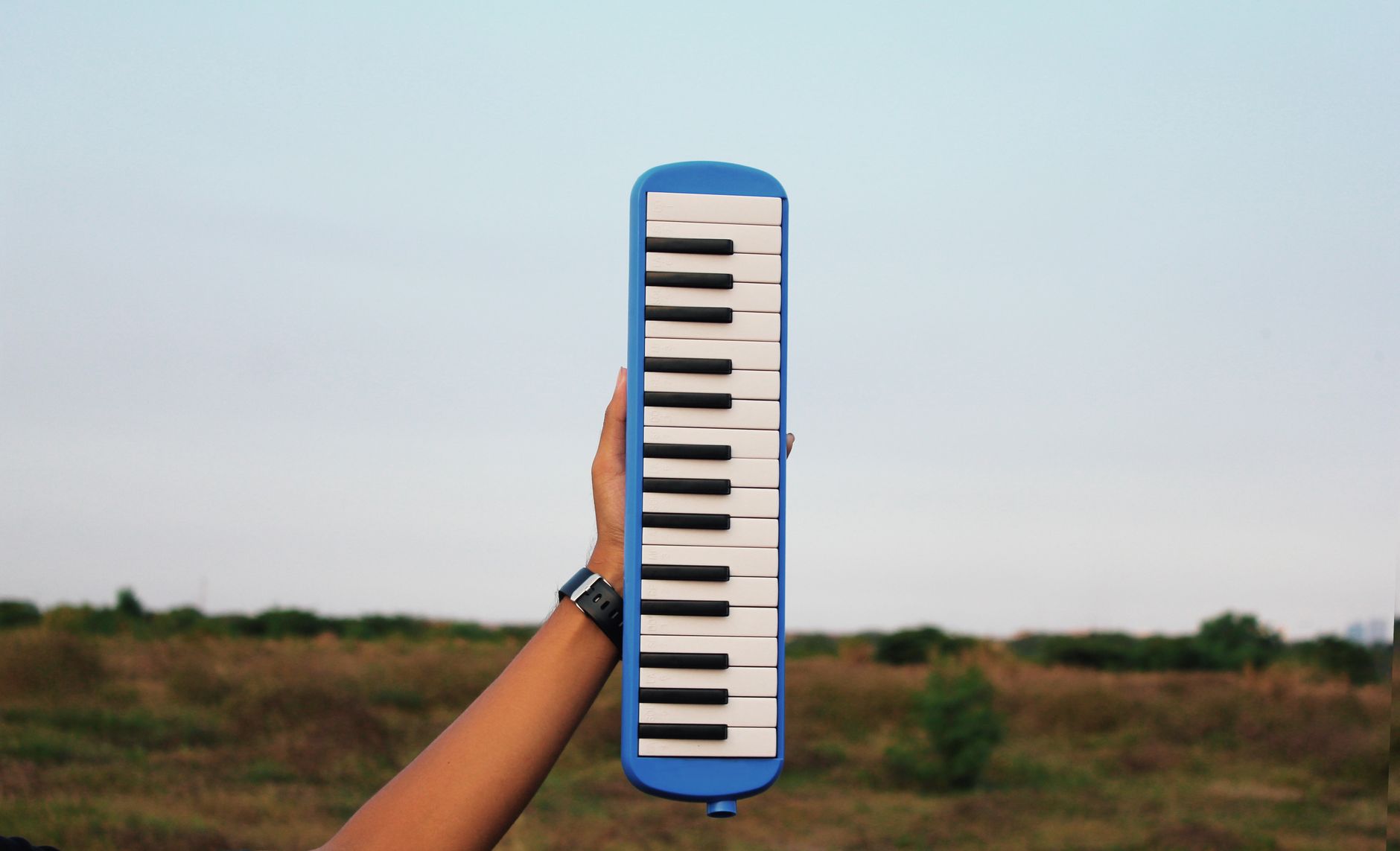
Types of melodica: soprano, alto and professional
| Type | Sound | Typical keys | Best for |
|---|---|---|---|
| Soprano | High and bright | 25–37 | Most common, versatile, pop and jazz |
| Alto | Lower and warmer | 32–37 | Orchestral timbre, accompaniment |
| Professional | Rich, stable tuning | 37–44 | Live performance and recording |
| Children's | Bright, plastic | 13–25 | Kids and first contact |
For most beginners, a 32- or 37-key soprano melodica is the most balanced choice: it covers nearly all popular songs, is portable and affordably priced.
Melodica vs other instruments for beginners
| Melodica | Kalimba | Otamatone | |
|---|---|---|---|
| How the note sounds | Blow + piano key | Thumb pluck on tines | Slide finger along neck |
| Play any song | Yes (full keyboard) | Limited to its scale | Yes, but requires ear training |
| Difficulty | Easy | Very easy | Medium (intonation) |
| Price | $25 – $90 | $20 – $60 | $30 – $60 |
The melodica wins when you want to play real melodies in any style and leverage piano knowledge. The otamatone is unbeatable for fun content creation.
How to choose your first melodica
- Number of keys: 32 is the sweet spot (over two and a half octaves). 37 gives more range if you already play piano; 25 or fewer are for children or very casual use.
- Brand: Yamaha (Pianica), Suzuki (Melodion) and Hohner are the reliable references for stable tuning and durability. Very cheap unbranded melodicas tend to go out of tune and have stiff keys.
- Accessories: look for both a short mouthpiece (to play standing while holding it) and a long flexible tube (to rest it on a table) plus a case. That is what separates a good pack from a toy.
Models by profile
| If you are… | You want | Approx. price |
|---|---|---|
| Curious / gift | 32-key soprano, known brand | $25 – $55 |
| Know some piano | 37-key Yamaha or Suzuki | $55 – $100 |
| Want to perform live | Professional 37–44-key model | $130 – $250 |
| For children | 25 keys with tube and case | $20 – $40 |
Basic care
The melodica is very durable if well treated. The essentials: after each use, drain the moisture that condenses inside by opening the drain valve (or blowing without pressing keys) to avoid bad odours and sticky reeds; clean the mouthpiece regularly, especially if shared; store it in its case away from direct sunlight and humid spots. If a key sounds muffled, it is usually accumulated moisture, not a fault. With these habits it will stay in tune for years.
Where to buy a melodica
To start well, look for a 32- or 37-key soprano melodica from Yamaha, Suzuki or Hohner, with mouthpiece, flexible tube and case included:
Amazon.com — no affiliate tag.

Frequently asked questions
Is the melodica hard to learn?
No. It uses a piano keyboard, so any piano knowledge transfers directly. Day one you can play simple melodies.
How many keys should my first melodica have?
32 keys is the ideal starting standard — over two and a half octaves, compact. 37 for more range; 25 for children.
What is the difference between melodica, melodion and pianica?
Same instrument, different brand names: Hohner (melodica), Suzuki (melodion), Yamaha (pianica).
Soprano or alto melodica: which is better?
Soprano for starting out and for jazz/pop (most versatile). Alto when you want a deeper, warmer timbre.
How much does a melodica cost?
Beginner: $25–$55. Mid-range Yamaha/Suzuki: $60–$100. Professional: $150+.