The nyckelharpa is one of Europe's most fascinating and little-known instruments: a bowed string instrument with wooden keys that has resonated through Sweden's valleys for over 600 years. This guide covers everything you need to understand it, learn it, and — if its sound captivates you — buy one.
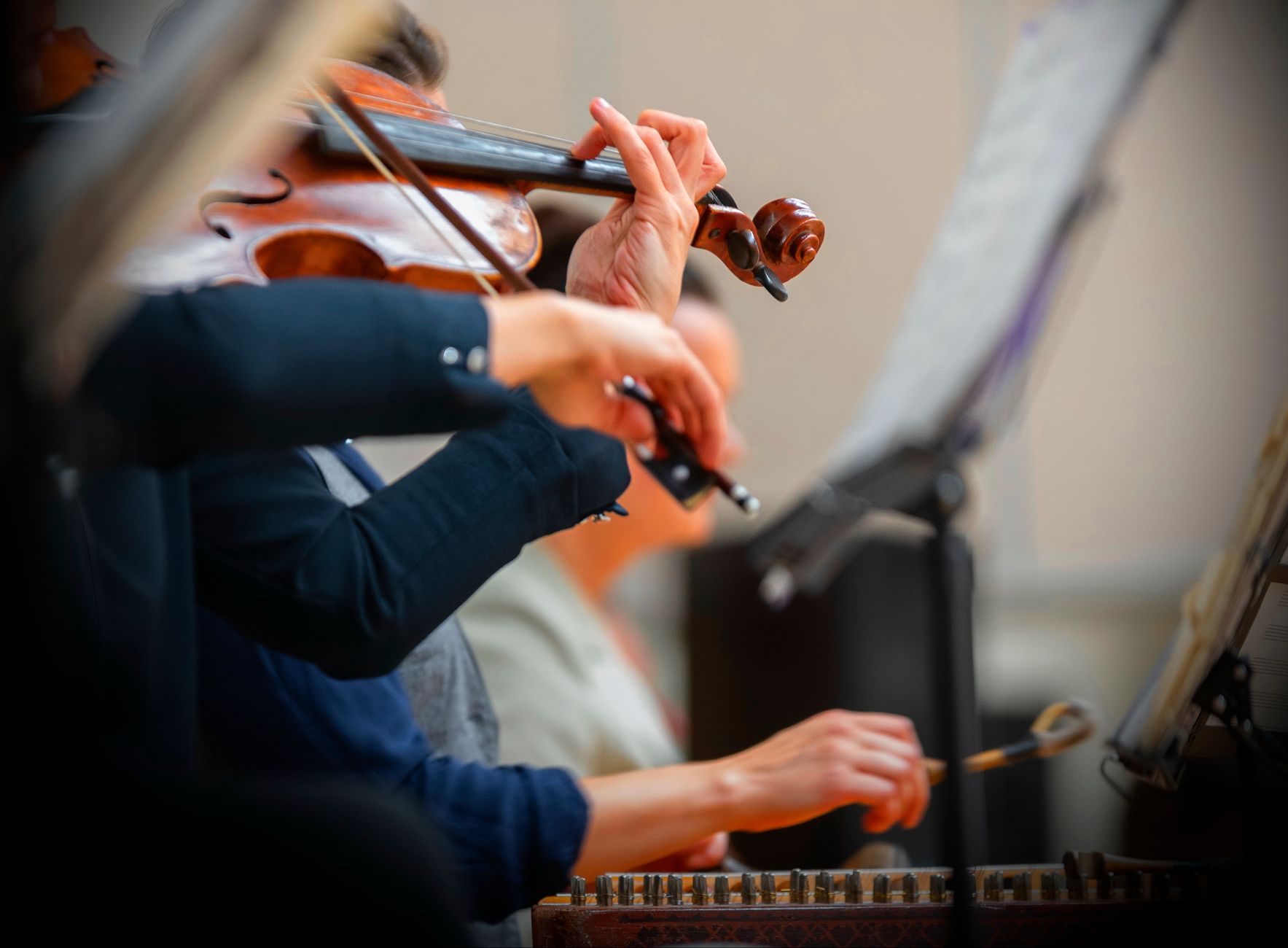
The nyckelharpa (pronounced: nykel-HAR-pa) is a traditional Swedish bowed chordophone. Its name is self-explanatory: nyckel (key) + harpa (harp/string instrument) = "keyed harp." In practice, it is a violin with a keyboard: played with a bow while the left hand presses wooden keys that use small tangents to stop the melody string at the exact pitch needed.
What makes the nyckelharpa truly extraordinary are its 12 sympathetic strings. These strings are never bowed or plucked — they simply hang beneath the instrument and vibrate freely in resonance with every note played, creating a shimmering halo of overtones that gives the nyckelharpa its unmistakable ethereal, almost choir-like timbre.
Today, the nyckelharpa is the national instrument of Sweden and a symbol of Swedish folk music identity — yet in the last three decades it has traveled far beyond Scandinavia to find a home in folk, medieval and world music scenes worldwide.
The earliest known depictions of the nyckelharpa appear in 14th-century woodcarvings in the churches of Uppland (central Sweden). For centuries it was the instrument of bröllopssmeder — the wedding and festival musicians of the Swedish countryside — who played it for polska, the traditional Swedish dance form.
By the 19th century it had nearly disappeared, pushed aside by the accordion and piano. It was musician and craftsman August Bohlin who, in the early 20th century, designed the modern chromatic version (37 keys covering 3 full octaves), transforming a fading instrument into a fully versatile one for contemporary music.
In 1989, the prestigious Zornmärket competition was officially recognised by the Swedish state, and in 2001 the nyckelharpa was declared Sweden's national instrument, with institutional support for teaching and preservation.
| Part | Material | Function |
|---|---|---|
| Body | Spruce (top) + maple (back & sides) | Main resonance chamber |
| Neck & keybox | Birch or maple | Holds keys and strings |
| Keys (37) | Hardwood (maple/boxwood) | Stop string at specific pitch when pressed |
| Tangents | Metal or wood | The tip of each key that contacts the string |
| Melody strings (3) | Steel or gut | Bowed to produce the main melody |
| Drone string (1) | Steel | Sounds continuously for depth |
| Sympathetic strings (12) | Fine steel | Vibrate in resonance to add overtones |
| Bow | Pernambuco + horsehair | Draws across strings to produce sound |
The total range covers 3 complete octaves, from low G (same as the 4th string of a violin) to high G.
The nyckelharpa hangs from a neck strap (like a guitar), resting against the belly and right thigh:
Key advantage over the violin: no need to find pitches by ear — the keys fix every note. This makes it significantly more accessible for beginners and keyboard players crossing over to bowed strings.
Hear the shimmering sympathetic strings and the driving rhythm of the Swedish polska.
| Model | Keys | Strings | Level | Approx. price |
|---|---|---|---|---|
| Medieval / Monocord | 8–12 | 2–4 | Introductory | €300–€700 |
| Tricord (3 rows) | 24 | 9 | Beginner–Intermediate | €800–€1,500 |
| Chromatic (modern) | 37 | 16 | Standard / Pro | €2,000–€4,000 |
| Swedish luthier (custom) | 37 | 16 | Professional | €4,000–€7,000 |
For most beginners, the tricord model strikes the best balance between accessibility and versatility. The full chromatic model is the standard for performing the complete Swedish folk repertoire.
→ Browse nyckelharpas on Amazon.com → Amazon UK
As Amazon Associates we earn from qualifying purchases. Price does not change for you.
| Nyckelharpa | Hurdy-gurdy | Violin | |
|---|---|---|---|
| Origin | Sweden (14th c.) | Europe (10th c.) | Italy (16th c.) |
| Note mechanism | Wooden keys + tangents | Wheel + chromatic keyboard | Fingers on unfretted neck |
| Bow | Yes (right hand) | No (hand crank) | Yes (right hand) |
| Sympathetic strings | Yes (12) | Not on basic models | No |
| Difficulty | Medium (pitch is easy) | Medium | High |
| Entry price | €800–€1,500 | €600–€1,200 | €100–€400 |
If you love that Nordic sound but want something less expensive to start, the kalimba offers an accessible melodic experience. For another keyed string instrument, explore the hurdy-gurdy (different mechanism, same medieval spirit).
The nyckelharpa is a traditional Swedish keyed fiddle — a bowed string instrument with wooden keys that press tangents onto the melody strings to produce notes, eliminating the need to finger individual pitches on the fingerboard. It has 3 melody strings, 1 drone string, and 12 sympathetic resonance strings. The name means 'key harp' in Swedish.
The nyckelharpa originates from the Uppland region of Sweden. The oldest confirmed depictions appear in 14th-century woodcarvings in Swedish churches. It was nearly extinct in the 19th century but was revived by folk musicians in the early 20th century, culminating in the chromatic version designed by August Bohlin that is standard today.
The modern chromatic nyckelharpa has 16 strings in total: 3 melody strings (played with the bow and stopped by keys), 1 drone string (plays continuously beneath the melody), and 12 sympathetic strings (vibrate freely in resonance, adding overtones). This gives the instrument its distinctive rich, resonant timbre.
The nyckelharpa is more accessible than the violin for pitch accuracy, since the keys fix the notes. However, coordinating the bow (right hand) with the keys (left hand) takes practice. Players with keyboard or fiddle experience adapt faster. First folk melodies can be learned within weeks with a good teacher.
The instrument hangs from a neck strap against the body. The right hand draws a short bow across the melody and drone strings. The left hand presses the wooden keys — each with a small tangent that stops the string at the correct pitch. Bowing style is rhythmic and percussive, especially for Swedish polska dances.
Quality luthier-made nyckelharpas cost €2,000–€6,000. Workshop-produced beginner models range from €800–€1,500. Second-hand instruments from associations can be found for €500–€900. Unlike violins, there is no inexpensive mass-market option below ~€500 that plays well — quality of key action matters enormously.
Originally the heart of Swedish folk music (polska, schottische, Swedish waltz), the nyckelharpa is now also used in Celtic folk, Nordic contemporary music, world music and medieval music. It appears in fantasy film and game soundtracks and has been adopted by folk ensembles worldwide since the 1990s.
In Sweden, many folk music schools (folkmusikskola) and the Zornmärket competition provide the framework. Outside Sweden, the American Nyckelharpa Association (ANNA) and the British Nyckelharpa Association organise workshops and courses. Online lessons via Zoom are available through The Folk Music Academy and individual teachers in many countries.