The balafon is one of the world's oldest and most captivating instruments: a wooden xylophone with gourd resonators that has been sounding across West Africa since the 12th century. This guide covers everything you need to understand it, learn it, and — if you fall for its sound — buy one.
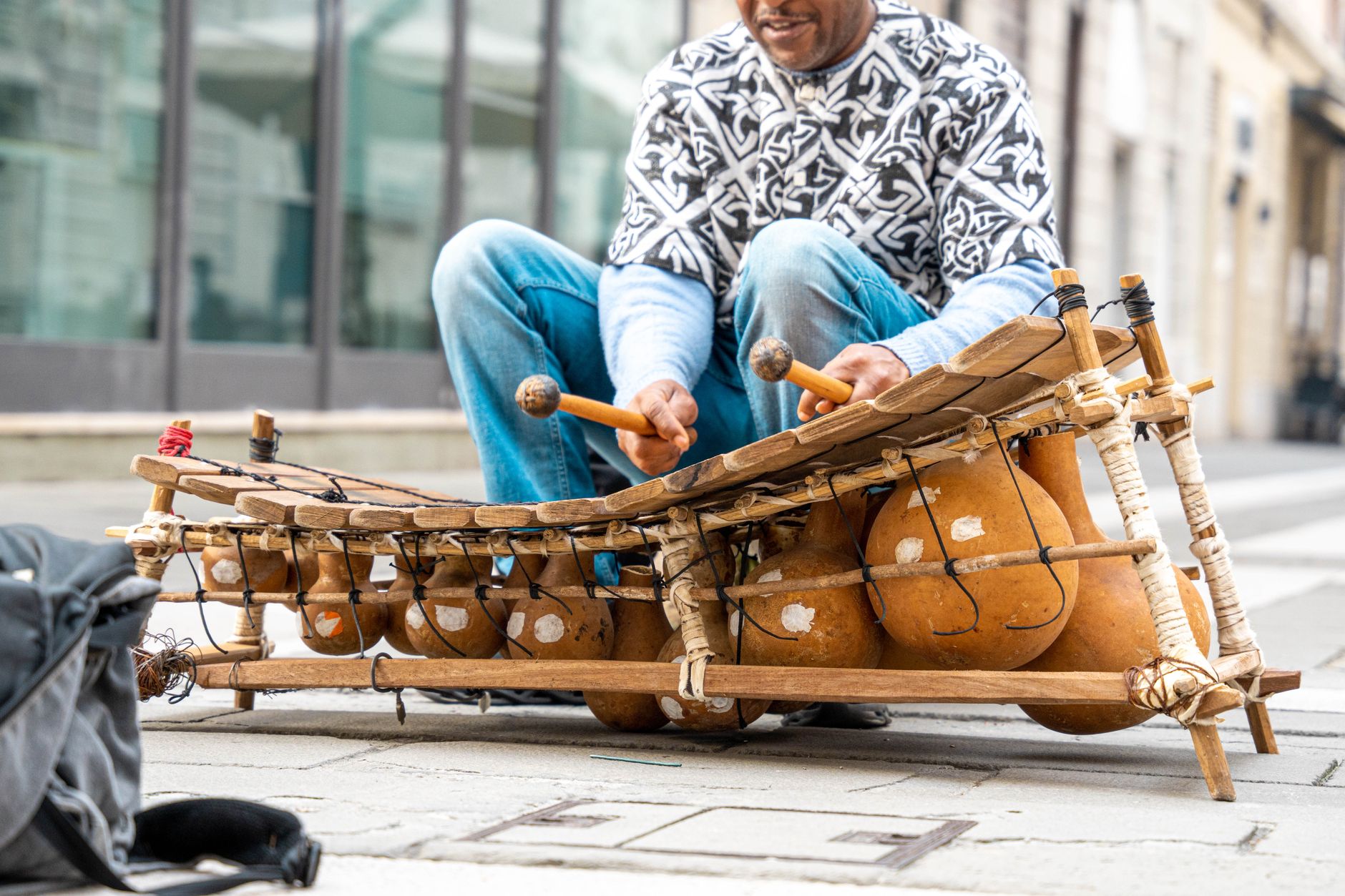
The balafon (also spelled balaphone or balo) is a percussion idiophone: an instrument where the body itself is the sound source. In Western terms, it is a xylophone from West Africa — but calling it "just a xylophone" does it a disservice.
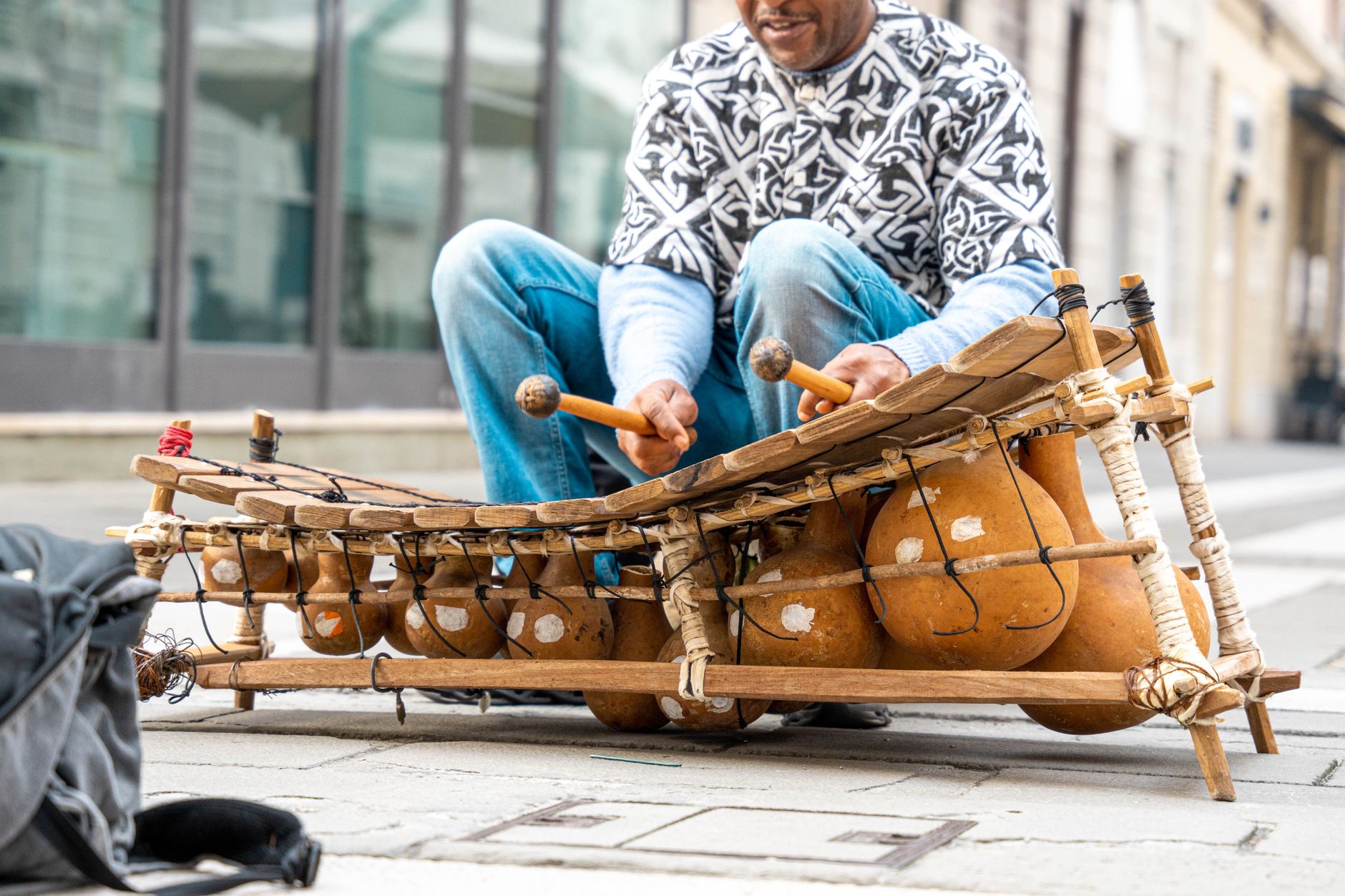
What sets it apart are the hollow gourd resonators (calabashes) hanging beneath each wooden key. Each gourd is tuned to resonate at exactly the frequency of the key above it, amplifying and enriching the sound in a way that is utterly unmistakable. Some gourds even have small holes covered with a thin membrane that adds a distinctive buzzing overtone — the "mirliton" effect.
It is played with two mallets with rubber or padded heads, one in each hand, following complex rhythmic patterns that in the Mandé tradition are learned generation to generation from the griot — the musician-narrator who is the custodian of oral history.
The history of the balafon stretches back to the Mali Empire of the 12th century. According to the oral tradition of the griots, the instrument was revealed to Bala Faseke Kuyaté, the griot of King Soundjata Keïta, founder of the Empire. Since then, the balafon has been inseparable from the griot tradition and the transmission of African oral history.
The oldest known balafon is the Sosso-Bala, preserved in a small mud hut in Niagassola, Guinea. Over 800 years old, it may only be played by the patriarch of the Dökala griot family, and only on special occasions. In 2001, UNESCO declared it a Masterpiece of the Oral and Intangible Heritage of Humanity.
Today the balafon remains the heart of traditional music in Mali, Senegal, Burkina Faso, Guinea and Côte d'Ivoire, and has reached Europe and the Americas through the diaspora and world music musicians.
| Part | Traditional material | Function |
|---|---|---|
| Keys (slabs) | Hardwood (béné / Afzelia africana) | Produce sound when struck |
| Frame | Bamboo or light wood | Holds keys in order, low to high |
| Gourds (calabashes) | Dried Lagenaria gourds | Resonators: amplify and enrich sound |
| Membrane | Spider silk or thin paper | Adds the characteristic "mirliton" buzz |
| Mallets | Rubber or leather head | Strike the keys to produce sound |
| Cord | Leather or braided cord | Secures gourds to the frame |
Keys are arranged left to right from lowest (left) to highest (right) pitch, following a pentatonic or heptatonic scale depending on the region.
The balafon is played standing up or seated on a small bench, with the instrument in front of you:
Styles vary by region: the Mandé style (Mali) uses patterns in 4/4 and 6/8; the Lobi style (Burkina Faso) is more free and polyphonic.
Listen to the characteristic sound of the gourd resonators and the speed master griots achieve.
| Model | Keys | Level | Approx. price |
|---|---|---|---|
| Entry level | 17 keys | Beginner | €80–€150 |
| Standard | 19–21 keys | Intermediate | €200–€400 |
| Professional | 23–27 keys | Advanced | €400–€800 |
| Artisan griot | 21–27 keys | Professional | €500–€1,500 |
For absolute beginners, a 19–21 key pentatonic-tuned model is the best choice: it has enough range for complete melodies without being overwhelming.
→ Browse balafons on Amazon.com → Amazon UK
As Amazon Associates we earn from qualifying purchases. Price does not change for you.
| Balafon | Kalimba | Steel Drum | |
|---|---|---|---|
| Origin | West Africa (12th c.) | Zimbabwe / Africa | Trinidad & Tobago |
| Material | Wood + gourds | Metal (tines) | Metal (pan) |
| How played | Two-mallet striking | Thumbs | Padded mallets |
| Scale | Pentatonic or heptatonic | Diatonic or pentatonic | Chromatic |
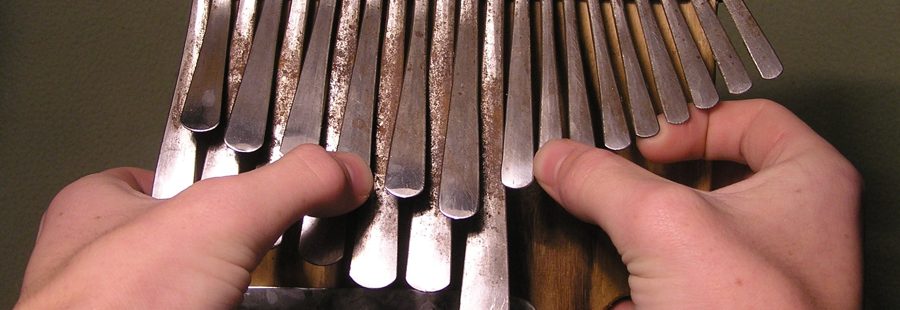
| Entry price | €80–€150 | €20–€60 | €300–€600 |
| Difficulty | Medium (hand independence) | Low | Medium–high |
If you want something more portable and affordable to start, the kalimba is perfect. If you already have percussion experience and want a deeper, more tribal sound, the balafon is a unique experience.
The balafon is a West African percussion idiophone — a wooden xylophone with hollow gourd resonators hanging beneath each key. It has between 17 and 27 wooden keys and is played with two rubber-tipped mallets. It originated in the Mali Empire around the 12th century.
The balafon originates from the Mali Empire of the 12th century and is closely associated with the Manding, Gur and Senufo peoples of West Africa. The oldest known balafon, the Sosso-Bala, is over 800 years old and is preserved in Niagassola, Guinea.
Most beginner models have 17–19 keys; intermediate models have 19–21 keys; professional instruments can have up to 27 keys. A 19–21 key pentatonic balafon is the best starting point for most learners.
The balafon is one of the more accessible melodic percussion instruments. The first rhythmic patterns can be learned in hours. The real challenge is hand independence: the left hand holds an ostinato while the right hand plays the melody. No music reading required — the tradition is oral.
By scraping the underside of the wooden keys (raises pitch) or adding beeswax (lowers pitch). The gourd resonators must also be matched in size to each key's frequency. Traditional builders can tune by ear with remarkable precision.
Quality handcrafted balafons range from €150–€600 depending on key count, materials and origin. Entry-level 17-key models can be found from €80–€120. Avoid cheap souvenir models — their gourds don't resonate properly.
The traditional wood is béné or lingue (Afzelia africana), a very dense and resonant West African hardwood. African rosewood and other tropical hardwoods are also used. Wood quality directly affects the timbre and durability of the instrument.
Yes — the balafon naturally complements djembé, kora, ngoni and other West African instruments. It also works well in contemporary music, jazz and world music. Its pentatonic scale blends easily with many musical styles.