
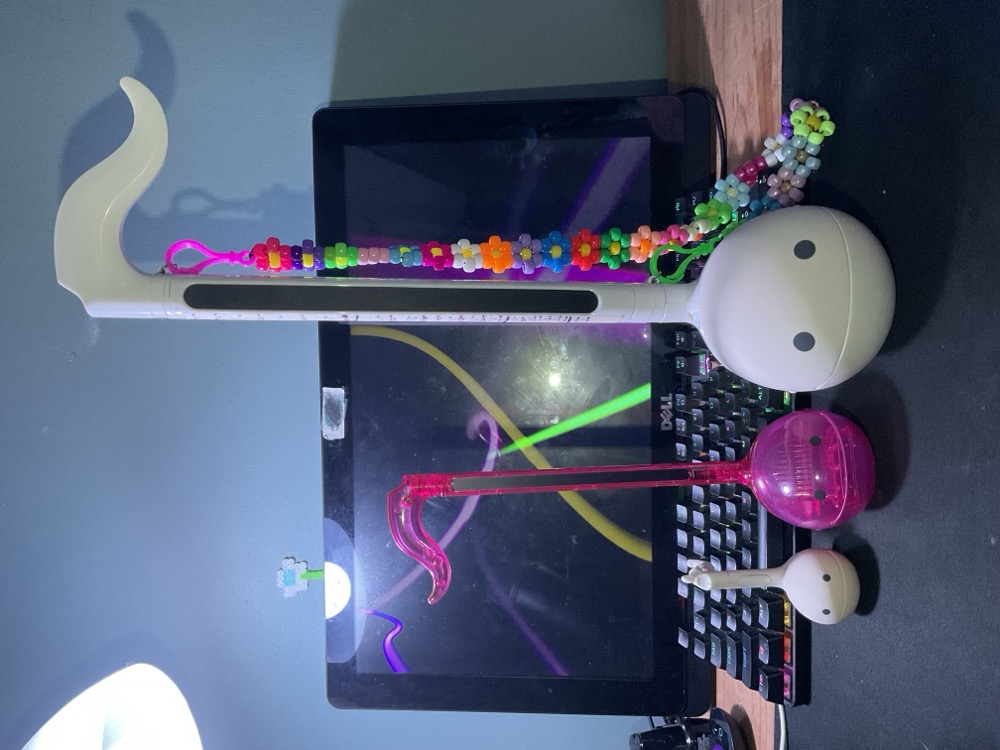
The Otamatone is delicate: its flexible tail collects dirt, the face can scratch easily, and the touch strip is the most sensitive part. If you carry it in a bag, store it in a drawer or pack it in a suitcase, an Otamatone case will save you from trouble.
See Otamatone cases on Amazon →
Amazon.com — no affiliate tag.
Why use a case?
- The touch strip is the most delicate part. It's the strip you slide your finger along to change pitch. Dust, scratches and fluff make it respond poorly.
- The tail attracts dirt. Being flexible rubber, it picks up dust and hand grease fast.
- The face scratches. The mouth that opens and closes is plastic and marks easily if it rubs against keys or a phone.
- Transport. Taking it to class, a friend's place or on a trip without protection risks bending the tail or breaking something.
Types of Otamatone case
| Type | Protection | Best for |
|---|---|---|
| Hard (EVA with zip) | High: bumps and crushing | Travel, daily transport |
| Neoprene / padded fabric | Medium: dust and scratches | Home use, occasional trips |
| Drawstring bag | Low: dust only | Storing in a drawer or on a shelf |
| DIY (glasses case, recorder case) | Variable | Budget emergency solution |
For home use, a neoprene sleeve is enough and inexpensive. For frequent transport (lessons, concerts, trips), invest in a hard case that protects against the impacts that actually break the instrument.
Classic vs Deluxe: watch your size
The most common mistake is buying the wrong size. The Otamatone comes in two main formats and they don't share cases:
| Model | Approx. length | Recommended case |
|---|---|---|
| Otamatone classic | ~27 cm | Standard case / short neoprene |
| Otamatone Deluxe | ~44 cm | Long Deluxe-specific case |
| Themed editions (cat, whale, reindeer…) | ~27 cm | Classic case |
Watch: how the Otamatone is used and stored
DIY alternative (free or nearly free)
Its music-note shape fits surprisingly well into things you might already have:
- Long glasses case or recorder case: the round head fits one end, the tail slots in.
- Thick sock or padded sleeve: protects from dust and light scratches.
- Drawstring bag (gift-bag type): easy storage in a drawer.
These work for dust, but won't protect from a hard knock. For that, use a dedicated case.
How to choose the right case
- Measure your Otamatone (or check the box): classic ~27 cm or Deluxe ~44 cm.
- Decide on use: home storage = neoprene; frequent transport = hard case.
- Check internal dimensions, not just the outside of the case.
- Look for a zip closure and, ideally, a small pocket for spare batteries.
FAQ
Do I really need a case?
Not strictly, but it's very useful. The tail collects dirt, the face scratches and the touch strip is delicate. A case is almost essential if you transport it.
Do Otamatones come with a case?
Generally no. The Deluxe includes a carry strap but not a full case. Cases are bought separately — make sure to get the right size.
What case fits the Otamatone Deluxe?
The Deluxe is ~44 cm versus ~27 cm for the classic, so it needs a Deluxe-specific or long case.
Hard case or neoprene: which is better?
Hard for travel and frequent transport; neoprene for home daily use.
Can I make a DIY case?
Yes — long glasses cases, recorder cases or padded bags work for dust protection, though not for hard bumps.