
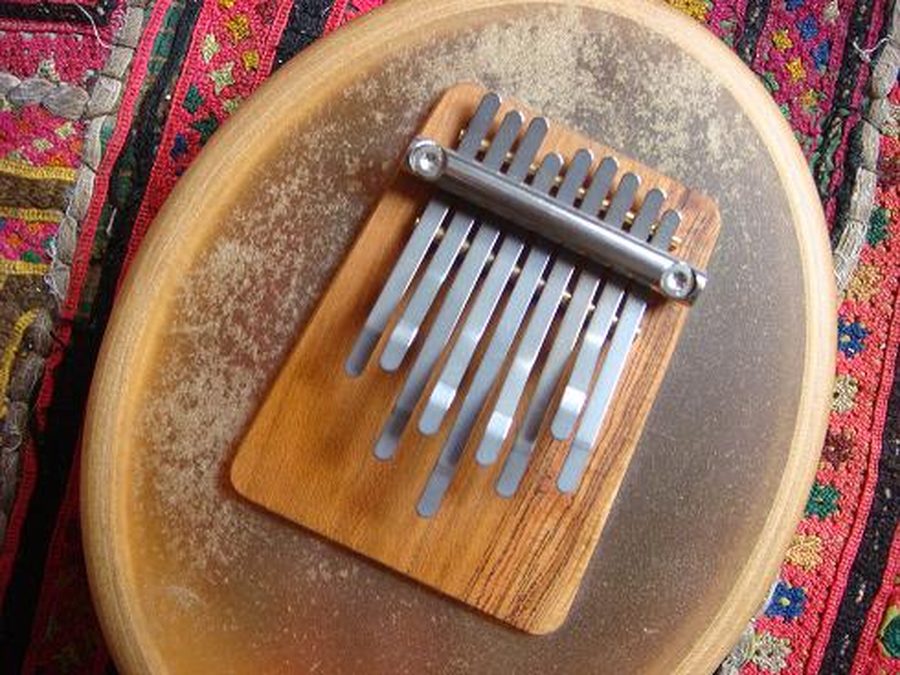
What is a sansula?
The sansula is one of the most magical variants of the kalimba. Instead of mounting the metal tines on a wooden box or board (like the classic kalimba), it mounts them on the tensioned membrane of a small frame drum. That resonant skin does two things: it amplifies the sound with enormous warmth and, above all, enables that unmistakable "wah" effect — an ondulating, ethereal, floating sway — that appears when you move the instrument while it sounds.
The result is a soft, reverberant and deeply relaxing sound, somewhere between a kalimba and a Tibetan singing bowl. No wonder the sansula has become a star instrument in meditation music, sound baths, yoga and relaxation. And since almost all come in pentatonic tuning (where everything sounds good), it is one of the easiest and most rewarding instruments in the world to start from scratch.
How it works: membrane, tines and air
The heart of the sansula is the drum membrane. The steel tines (the same tongues that vibrate in a kalimba) are fixed to a bridge resting on that skin. When you pluck a tine with your thumb, the vibration travels to the bridge and from there to the membrane, which acts as a natural loudspeaker: that is why the sansula sounds so warm and resonant despite its size.
The second secret is the resonance hole on the back. Covering and uncovering it — or opening and closing the gap between the membrane and your leg — changes how the air cavity breathes, and the timbre shifts from bright to muffled. Moving that rhythmically while a note sounds produces the famous wah-wah effect, like a guitar pedal made with your hand. That gesture is what sets the sansula apart from any other kalimba.
Origin: Peter Hokema's invention
The sansula is not an ancient instrument — it is a modern invention. It was created by German instrument maker Peter Hokema of the Hokema brand in the early 2000s. Hokema was seeking a softer, more resonant, more "floating" sound than the traditional kalimba, and came up with the idea of resting the tines on a frame drum's membrane. The name sansula itself is a Hokema registered trademark, though similar models and imitations exist from other brands.
The best-known version is the Hokema Sansula Basic, with 9 tines in a minor pentatonic scale. There is also a Sansula Renaissance with a more durable plastic membrane and interchangeable tines.
How to play the sansula step by step
The great advantage: being pentatonic, almost everything sounds good. You do not need to know music to improvise beautiful melodies on day one. Follow these steps:
- Hold the sansula with both hands. Grip it by the sides of the wooden frame, with the membrane resting on your palms or on your knees. Leave your two thumbs free — they are what pluck the tines.
- Pluck the tines with your thumbs. Push a tine downward with your thumbnail or thumb pad and release it to vibrate. The central tine is the lowest; the outer ones alternate increasingly higher notes. Practise single notes until they sound clean.
- Discover the wah effect. While a note is sounding, open and close the gap between the membrane and your leg (or cover and uncover the back hole). You will hear the sound shift from bright to muffled: that wavering is the sansula's wah.
- Play a simple melody. Move up and down the tines in slow patterns, letting each note ring. Do not rush: the charm of the sansula is in the spaces and the silence between notes.
- Combine notes with the wah. Put it all together: play a short phrase while moving the membrane to the rhythm. That gives you the floating, ondulating, meditative sound that makes it unmistakable.
The classic beginner mistake is pressing the tines too hard (sounds metallic and dry). Pluck gently and let the membrane do the work. The second mistake is not experimenting with the wah: that is where 80% of the magic lives.
Common mistakes and how to fix them
| Problem | Cause | Fix |
|---|---|---|
| Sounds metallic and dry | Pressing tines too hard | Pluck more gently; let the membrane resonate |
| No wah effect appears | Not moving the membrane while it sounds | Open/close the gap or back hole while the note vibrates |
| Sound dies quickly | Hand covering the membrane | Hold only by the frame, leave the skin free |
| Notes buzz or rattle | Loose tine or poorly seated bridge | Gently press the bridge or adjust the tine |
| Do not know what to play | Looking for a specific song | Improvise: being pentatonic, everything fits |
Sansula vs kalimba: which to choose
| Sansula | Kalimba | |
|---|---|---|
| Body | Drum membrane | Wooden box/board |
| Sound | Soft, ethereal, reverberant | Clear, defined, bright |
| Wah effect | Yes (its trademark) | No |
| Typical tuning | Pentatonic (everything sounds good) | Diatonic (17 notes, C major) |
| Best for | Relaxation, improvisation, meditation | Playing specific songs |
| Price | Slightly higher (Hokema) | More affordable entry point |
Summary: if you want to relax and improvise with a magical sound without knowing music, the sansula. If you want to play songs with numbered tablature, the standard kalimba.
Which to buy to start
| Type | For whom | Notes |
|---|---|---|
| Hokema Sansula Basic | The original, reference sound | 9 pentatonic tines, natural membrane |
| Hokema Sansula Renaissance | Wanting durability and interchangeable tines | Synthetic membrane, swappable tines |
| Generic sansula | Trying cheap before investing | Variable quality; check tuning and membrane |
Frequently asked questions
What is a sansula?
A kalimba variant where the metal tines are mounted on a frame drum membrane instead of a wooden box. That resonant skin gives an ethereal sound and allows the wah-wah effect when you move it. Invented by Peter Hokema in the early 2000s.
How is it different from a kalimba?
Both are played with the thumbs, but the kalimba has tines on wood and sounds clear and defined; the sansula has them on a membrane and sounds soft, reverberant and with a wah effect. The sansula is usually pentatonic (everything sounds good); the kalimba is diatonic with more notes.
How do I make the wah effect?
By covering and uncovering the back hole (or opening and closing the gap between the membrane and your leg) while a note is sounding. The timbre shifts from bright to muffled, creating an ondulating wave — like a guitar wah pedal made with the hand.
Is it hard to play?
One of the easiest instruments. Being pentatonic there are no wrong notes, so you improvise beautiful melodies from day one without knowing music theory. Only the wah effect and thumb coordination take a little practice.
How many notes does it have?
The Hokema Sansula Basic has 9 tines in a minor pentatonic scale. Enough for improvising and relaxing; more is rarely needed.