
Quick Answer
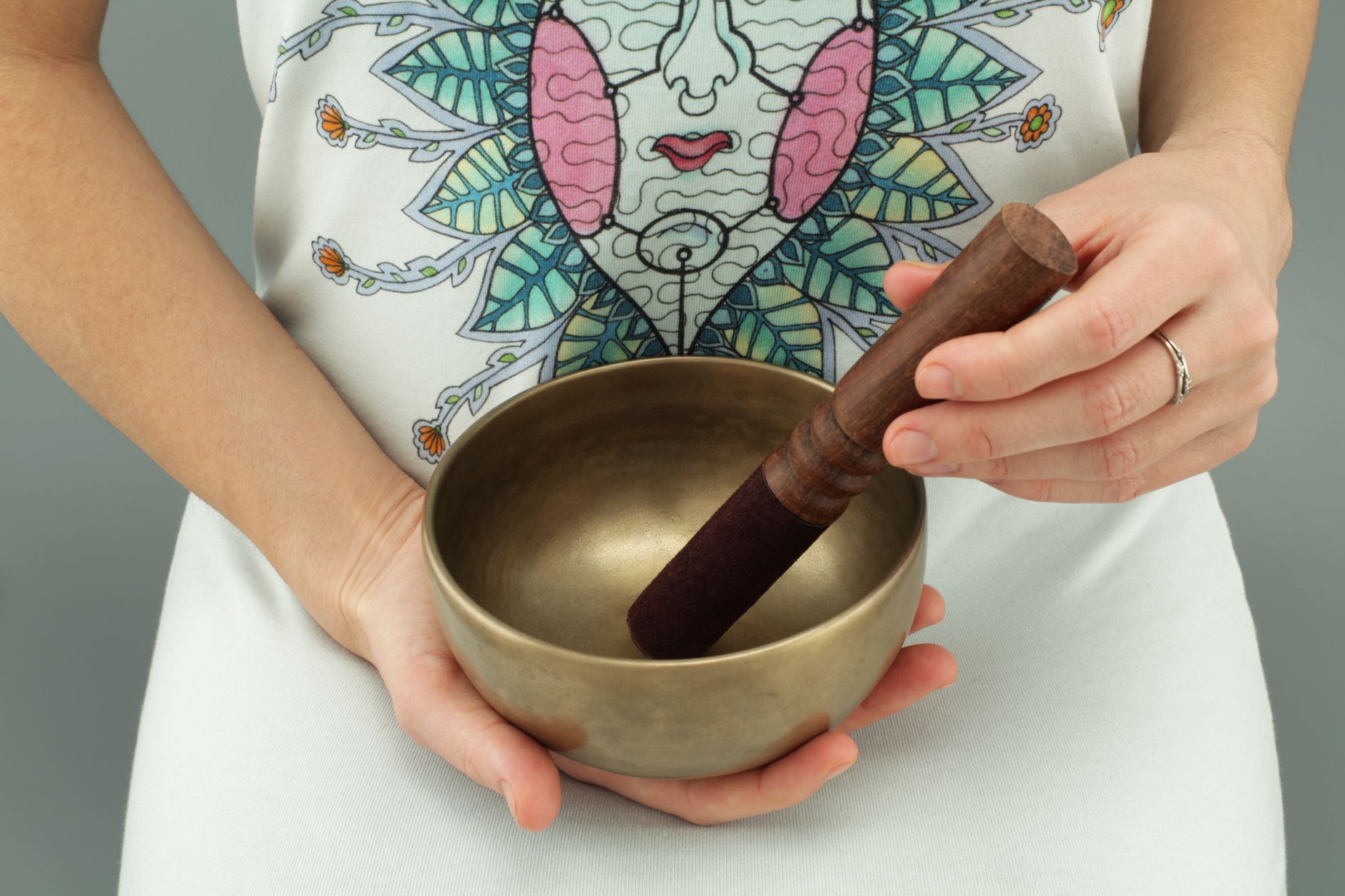
A Tibetan singing bowl is a percussion instrument that vibrates to produce sustained tones rich in harmonics. Used primarily for meditation, relaxation and sound therapy. To start, a metal bowl of 15-18 cm with mallet included is the best choice — available from €15-40 on Amazon. Crystal quartz bowls (more expensive, €80-300) produce a purer, more sustained sound.
What is a Tibetan singing bowl?
A Tibetan singing bowl (also called a singing bowl or Himalayan bowl) is a percussion instrument of Nepalese and Tibetan origin that produces a unique sound: a sustained fundamental tone with a rich layer of harmonics that can last for several seconds or even minutes.
Technically it is an idiophone — an instrument where the material itself (metal or crystal) vibrates to generate sound. Although called "Tibetan", most artisan production comes from Nepal, particularly the Kathmandu Valley region.
Historically used in Buddhist rituals, their use has expanded enormously into secular meditation, yoga, sound therapy and relaxation. They are also genuine musical instruments: contemporary composers like Tenzin Choegyal and ambient music groups integrate them into compositions alongside strings and electronics.
Unlike other unusual instruments such as the theremin (requiring months of practice) or the handpan (costing thousands of euros), a singing bowl is accessible from day one: anyone can produce sound in the first few minutes.
Types of Tibetan singing bowl: metal vs crystal
The most important choice before buying is between metal (traditional) and crystal (modern) bowls:
Metal bowls (7-alloy)
The authentic kind: handmade from an alloy of up to 7 metals (historically linked to the 7 planets: gold/Sun, silver/Moon, copper/Venus, iron/Mars, tin/Jupiter, lead/Saturn, mercury/Mercury). Modern industrial versions are typically bronze or brass.
Their sound is warm, complex and multi-tonal: in a single bowl you can hear several harmonics layered simultaneously. More robust, easier to handle and more affordable. Hand-hammered Nepalese artisan bowls have surface irregularities that enrich the sound.
Crystal quartz bowls
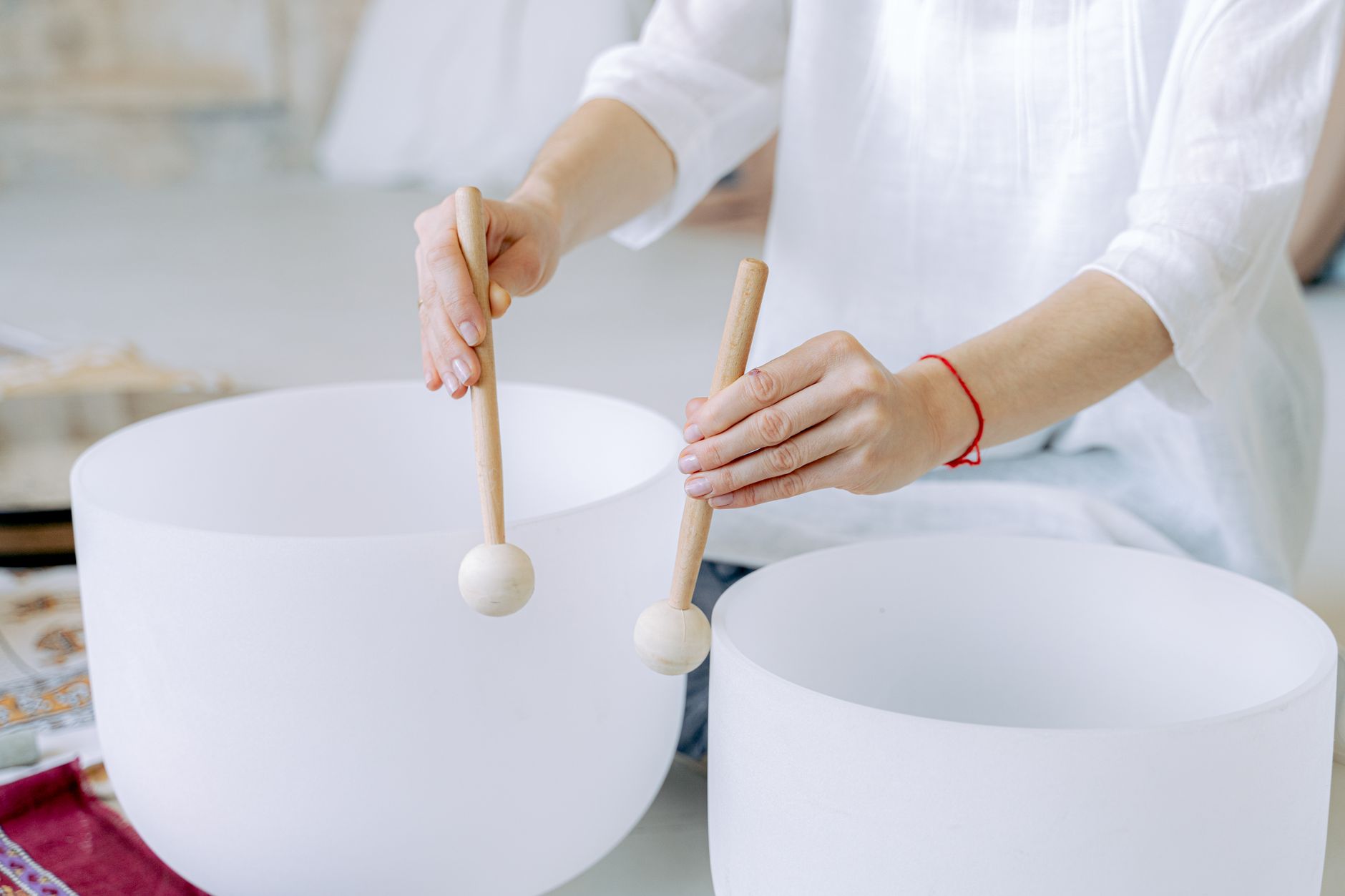
Made from pure quartz crystal melted at high temperatures. Their sound is radically different: pure, clean, crystalline and very sustained — almost like an organ note or an amplified soprano voice. Tuned to specific musical notes (C, D, E…) and in modern sound therapy they are associated with chakras.
They are more fragile and must be handled carefully — a strong blow can crack them. They are pricier and usually come in padded bags.
Which to choose?
For beginners: a metal bowl of 15-18 cm — more durable, easier to handle, more affordable.
For sound therapy or deep meditation: a crystal bowl tuned to a resonant note.
For a collection piece or special gift: a high-end hand-hammered Nepalese artisan bowl.
How to play a Tibetan singing bowl — step by step
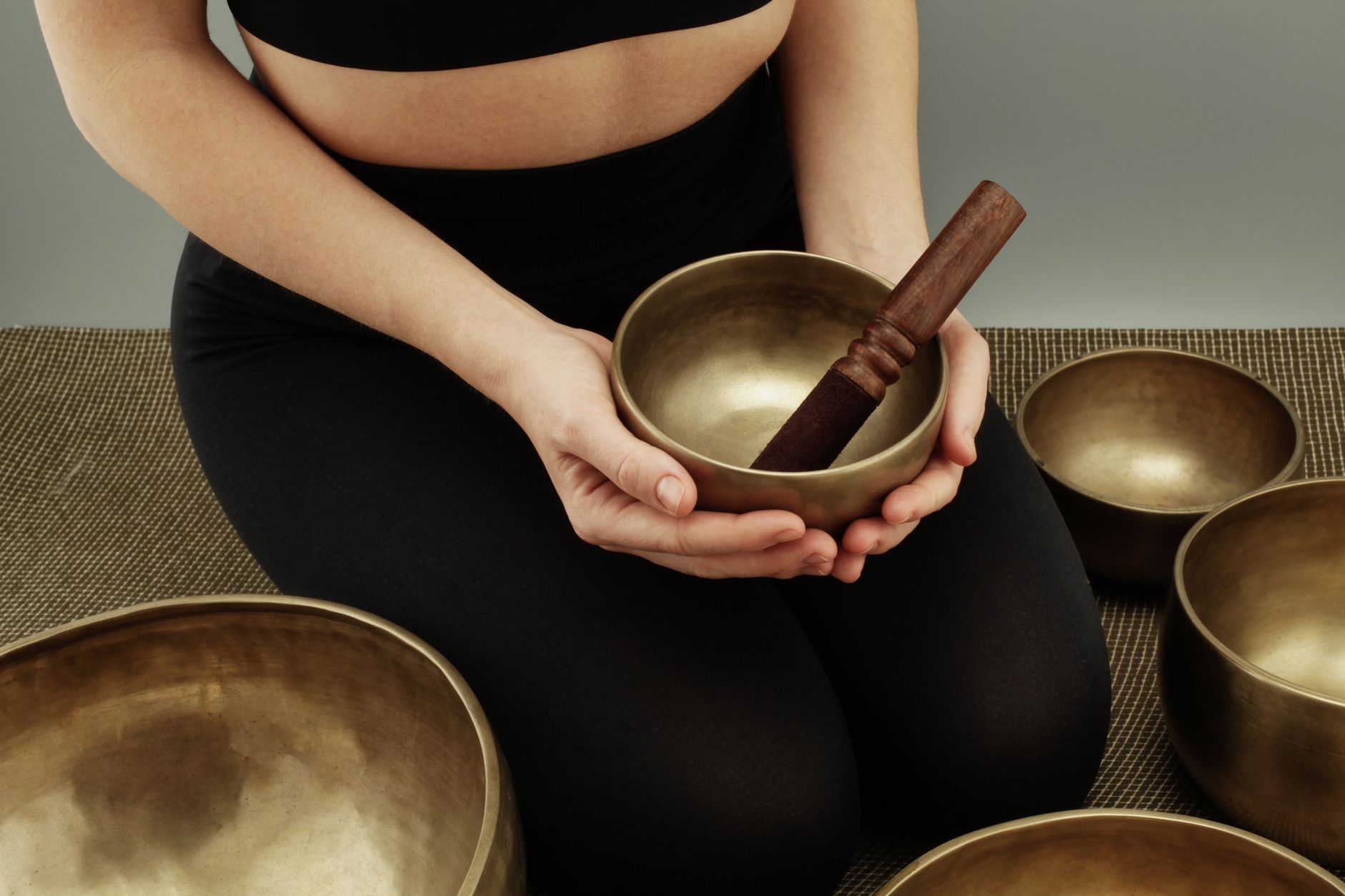
No musical experience is needed. There are two basic techniques:
1. Striking (bell technique)
- Rest the bowl on your open palm or on its cushion. Do not grip it with your fingers — let it vibrate freely.
- Hold the mallet like a pencil, with the index finger extended.
- Strike the outside of the bowl gently, in the middle zone between the rim and the base.
- Move the mallet away immediately — keeping it in contact dampens the vibration.
- Listen as the sound expands and fades over 10-30 seconds.
2. Rubbing (singing technique)
- Rest the bowl on your flat open palm, fingers not touching the outside.
- Strike lightly to activate the initial vibration.
- Apply the mallet against the outer rim with moderate pressure and move it in continuous circles, always in the same direction.
- Maintain constant pressure and speed. In 3-10 seconds the bowl will start to "sing" — a self-reinforcing sustained tone.
- Once singing, you can ease the pressure slightly and maintain the circular motion with less effort.
Key tip: the right pressure is the main challenge. Too much dampens the vibration; too little and the mallet skips. Practise on a stable surface for the first few sessions.
Best Tibetan singing bowls to buy in 2026
| Type | Material | Size | Price | Best for |
|---|---|---|---|---|
| Starter set | Metal (brass) | 12-15 cm | €15-40 | Beginners, curious |
| Nepalese artisan | 7-metal alloy | 15-20 cm | €60-150 | Regular meditation |
| Crystal quartz | Pure quartz | 20-30 cm | €80-300 | Sound therapy |
| Premium | Hand-hammered | 25-40 cm | €200-500 | Professionals, collectors |
All singing bowls on Amazon → Crystal bowls →
As Amazon Associates, we earn from qualifying purchases. No extra cost to you.
Benefits of singing bowls: what science says
Beyond traditional beliefs, there is preliminary evidence for some effects of singing bowl sound:
- Stress reduction: several small studies (including one in the Journal of Evidence-Based Complementary & Alternative Medicine, 2016) observed reduced cortisol and improved mood after sound therapy sessions with bowls.
- Inducing meditative states: the sustained tone acts as an attentional anchor (similar to a mantra), facilitating concentration and reducing internal dialogue.
- Casual binaural beat effect: sessions with multiple bowls at slightly different frequencies can generate low-frequency beats associated with alpha and theta brain waves.
Note: Most studies have small sample sizes. Medical consensus is that singing bowls are a valid complementary wellness tool, not a medical treatment.
Frequently Asked Questions
What is a Tibetan singing bowl?
A percussion idiophone made from metal or crystal that vibrates when struck or rubbed with a mallet, producing sustained tones rich in harmonics. Used for meditation, yoga and sound therapy.
Metal vs crystal: which is better?
Metal: warm, complex, multi-tonal sound. Crystal: pure, clean, very sustained. Metal is more durable and affordable; crystal is more fragile and expensive but produces a cleaner sound tuned to specific notes.
How do you play a singing bowl?
Two techniques: (1) Strike the outer rim gently and let it resonate. (2) Rub the mallet in circles against the rim with constant pressure until the bowl "sings". In both cases, rest it on an open palm so it vibrates freely.
How much does a good singing bowl cost?
Starter metal sets: €15-40. Quality Nepalese artisan bowls: €60-150. Crystal quartz: €80-300. Premium hand-hammered: €200-500+.
What size singing bowl for beginners?
15-18 cm diameter — easy to hold in one hand, comfortable to rub, well-balanced mid-range tone. Under 12 cm is harder to make sing; over 25 cm requires more mallet pressure.
Where to buy Tibetan singing bowls
Amazon has the largest selection: from starter sets (bowl + mallet + cushion) from €15-25, to verified Nepalese artisan bowls and high-purity crystal quartz bowls.
All singing bowls → Nepalese artisan → Crystal bowls →
As Amazon Associates, we earn from qualifying purchases. No extra cost to you.