
Quick answer
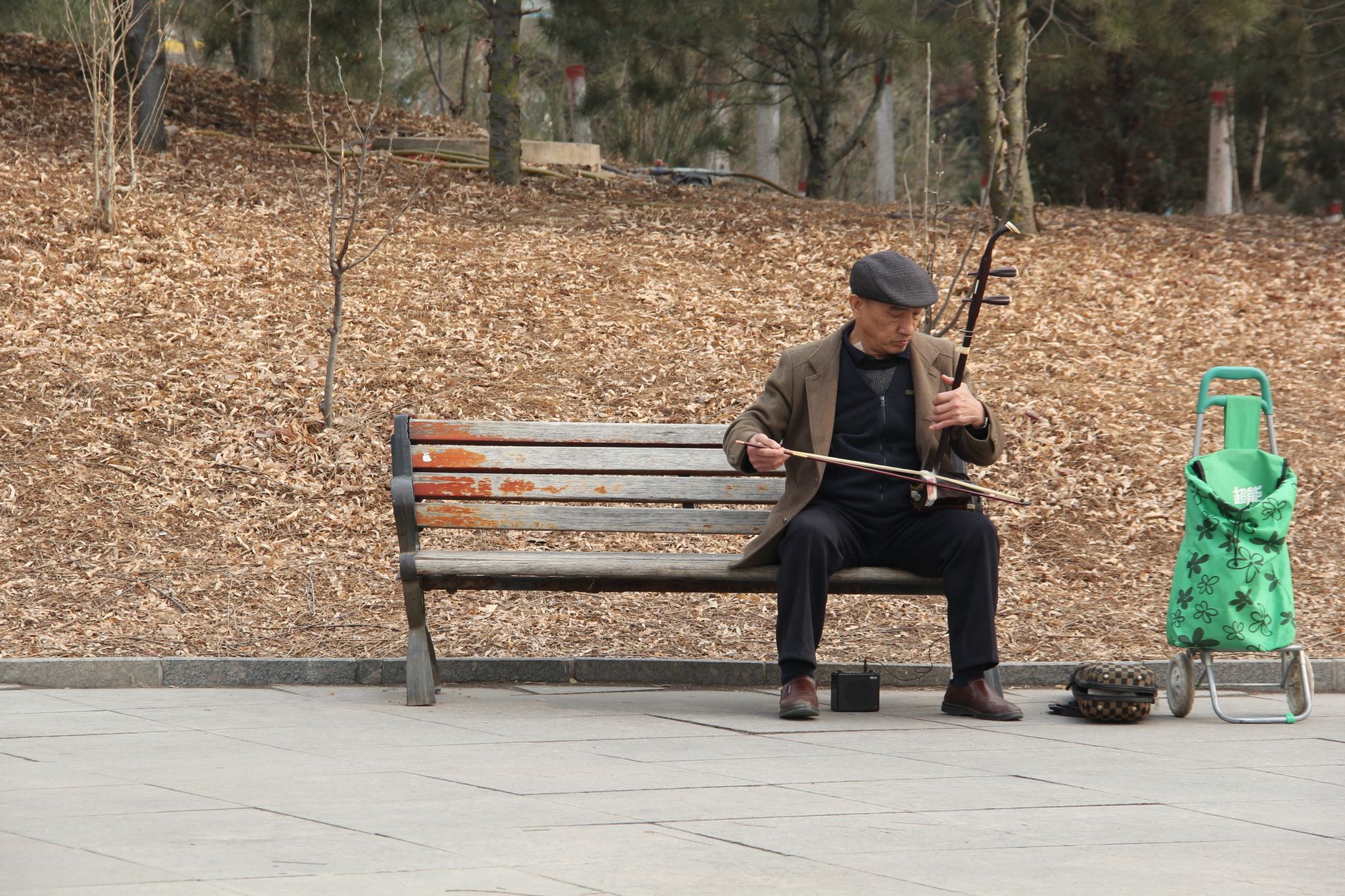
The erhu is a Chinese bowed instrument with just two strings, a resonator box traditionally covered in python skin, and a neck with no frets or fingerboard: the strings hang free in mid-air. The horsehair bow passes between the two strings, never outside them. Known as the "Chinese violin", its voice-like sound is a soundtrack staple in films like Mulan and Kung Fu Panda. A student model costs $50-150.
What is the erhu
The erhu (二胡) is a bowed string instrument belonging to the huqin family, the broad group of spike fiddles found across Asia. At first glance it looks like a small, vertical violin, but its construction is radically different: it has only two strings, usually tuned to D4 and A4 (a fifth apart, like a viola's two lowest strings), and a small hexagonal or octagonal resonator box, traditionally covered with python skin on one end.
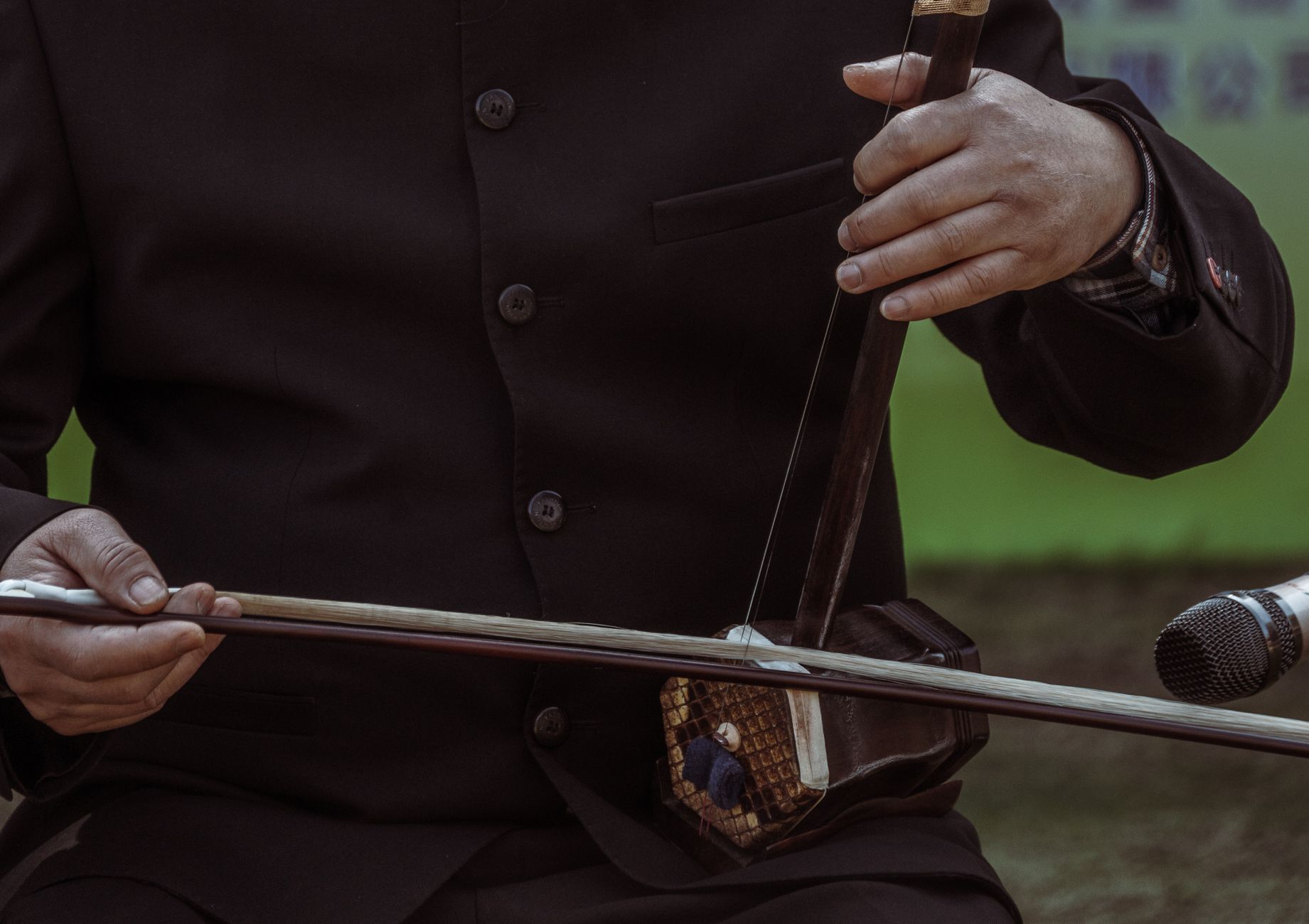
The erhu's most unusual feature is its fretless, fingerboard-less neck: the strings never touch the wood at any point — they hang entirely in mid-air. The player doesn't press the string against a neck as on a violin or guitar; instead, they pinch the string against itself with a fingertip. That means there's no physical reference for where each note sits — everything relies on trained hearing and muscle memory.
Another unique detail: the horsehair bow passes between the two strings, not outside them as on a violin. This forces the player to bow both strings with the same bow, constantly controlling pressure and angle so that only the intended string sounds.
History: from the Tang dynasty to Hollywood soundtracks
The erhu descends from bowed instruments known as xiqin, introduced to China by Central Asian peoples during the Tang dynasty (7th-10th centuries). These early spike fiddles arrived via the northern and western trade routes and gradually merged with Chinese musical tradition.
During the Song and Yuan dynasties the instrument's modern form was standardized, and by the Qing dynasty (17th-20th centuries) it was already a cornerstone of both Peking opera and folk music in the southern provinces. In the 20th century, the erhu made the leap into the concert repertoire thanks to composers and performers who expanded its technique and its role within the modern Chinese orchestra.
The most celebrated piece in the repertoire is "Erquan Yingyue" (The Moon Reflected on the Second Spring), composed by blind street musician Abing (Hua Yanjun) in the early 20th century. Today, the erhu's melancholic, voice-like timbre also appears in Western soundtracks such as Mulan, Kung Fu Panda, Crouching Tiger, Hidden Dragon, and House of Flying Daggers, and it regularly stars in viral social-media performances.

How to play the erhu: first steps
- Posture: sit down and rest the erhu's cylindrical base (called the qintong) upright on your left thigh, with the neck pointing upward.
- Holding the bow: grip the bow with your right hand, with your fingers passing inside the hair, since it runs between the two strings, not outside them.
- Left hand in mid-air: place your fingers on the strings with no wooden reference point; each note's position is learned by heart, guided by your ear.
- Press, don't fret: to change notes, press the string against itself (not against the neck) and slide your finger along it.
- Control the bow angle: a slight tilt of the wrist makes the hair brush one string or the other without changing bows.
- Practice vibrato: a gentle rocking of the finger on the string while it sounds adds the erhu's characteristic "vocal" expressiveness.
Tip: the biggest hurdle for beginners isn't the bow hand — it's finding the notes with no physical reference at all. Practicing with a visual tuner for the first few weeks speeds up learning enormously.
How much does an erhu cost: 2026 comparison
A breakdown of available tiers based on materials and craftsmanship:
| Tier | Approx. price | Resonator skin | Best for |
|---|---|---|---|
| Student | $50-150 | Synthetic | Starting out without a big investment |
| Intermediate | $150-500 | Synthetic or basic python | Students with 1-2 years of practice |
| Professional | $500-2,000+ | Python (subject to local rules) | Concert and recording use |
As an Amazon Associate we earn from qualifying purchases, at no extra cost to you.
Erhu vs violin vs musical saw: three "otherworldly" sounds
Compared to other bowed instruments you may already know, the erhu occupies a niche all its own:
Erhu
- Strings: 2, no fingerboard
- Sound: nasal, vocal, melancholic
- Typical use: traditional Chinese music, East Asian-themed soundtracks
- Price: $50-2,000+
Violin
- Strings: 4, over a fingerboard
- Sound: bright, projected, versatile
- Typical use: classical, folk, pop, virtually all Western genres
- Price: $60-several thousand
Musical saw
- Strings: none — it's a flexible steel blade
- Sound: ethereal, similar to a theremin
- Typical use: American folk, horror-movie and nostalgic film scores
- Price: $15-150
Bottom line: if you want the sound closest to a human singing voice, the erhu wins hands down. If you want versatility to play any genre, the violin is the natural choice. And if you're drawn to the unusual and affordable, the musical saw is the cheapest gateway into "otherworldly" sounds.
Erhu in action: video tutorial
This tutorial covers basic posture, how to hold the bow between the two strings, and how to produce your first clean notes:
Frequently asked questions about the erhu
What is the erhu?
A Chinese bowed instrument of the huqin family, with two strings tuned a fifth apart, a resonator box covered in skin, and a fretless, fingerboard-less neck. The bow passes between the two strings. It's known as the "Chinese violin".
How do you play the erhu?
Held upright on the thigh, with the horsehair bow passing between the two strings; notes are played by pressing the string against itself in mid-air, with no fingerboard reference. Everything relies on your ear and muscle memory.
Is the erhu hard to learn?
Yes, it's among the most demanding string instruments to start because there are no frets or fingerboard marking the notes. A first sound is achievable in your very first session, but precise intonation takes months of practice.
How much does an erhu cost?
Student model with synthetic skin: $50-150. Intermediate: $150-500. Professional handmade with python skin (subject to regulations): from $500, sometimes over $2,000.
Why doesn't the erhu have frets or a fingerboard?
A unique traditional design feature: the strings hang in mid-air and are pressed against themselves, not against wood. This enables very expressive slides and vibrato similar to the human voice, though it demands more ear control.
How is the erhu different from the violin?
2 strings instead of 4, no fingerboard, rests on the thigh instead of under the chin, and the bow passes between the strings instead of outside them. The erhu sounds more nasal and vocal; the violin, brighter and more projected.
Where does the erhu come from?
It descends from the xiqin, bowed instruments brought to China by Central Asian peoples during the Tang dynasty. It was standardized during the Song and Yuan dynasties and became a pillar of Peking opera during the Qing dynasty.
Which films feature the erhu?
Mulan, Kung Fu Panda, Crouching Tiger Hidden Dragon, and House of Flying Daggers, among others, where its nasal, melancholic timbre evokes a Chinese setting.