
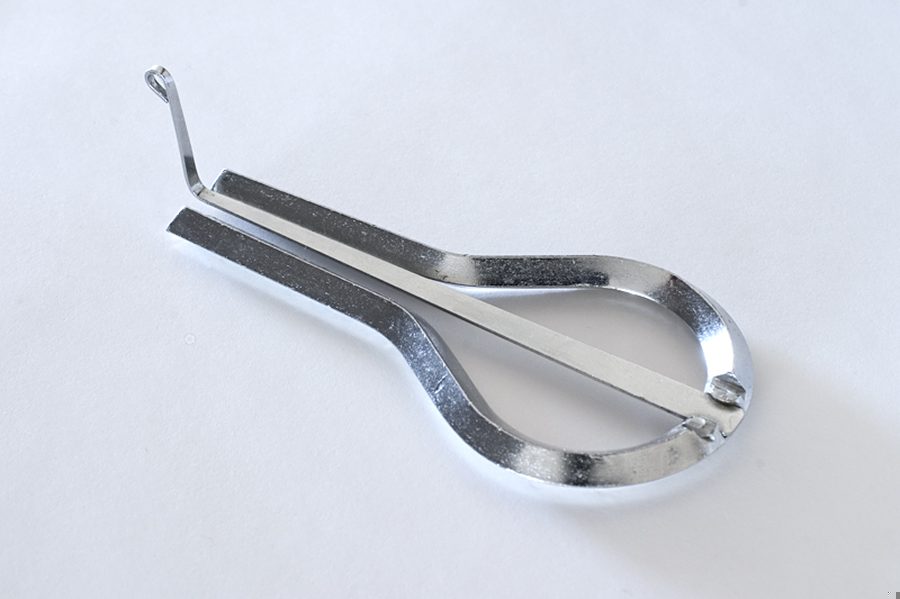
What is a jaw harp?
The jaw harp — also known as mouth harp, Jew's harp, guimbarda (Spanish), maultrommel (German), morchang (Indian) or vargan (Russian) — is one of the oldest and most universal instruments in the world. Despite its many names, the concept is always the same: a small frame of metal or bamboo with a flexible tongue (lamella) in the centre.
You hold the frame against your front teeth or lips, pluck the tongue with a finger and let it vibrate. Your mouth and head cavity act as the resonance chamber, amplifying the sound. By changing the shape of your mouth — opening different vowels (A, E, I, O, U) and breathing in different ways — you modulate the harmonics of the vibrating tongue, creating a twangy, buzzing, hypnotic and surprisingly expressive sound.
How it works: your mouth as a resonance chamber
When you pluck the lamella, it vibrates at a fixed fundamental frequency (the base note, which depends on the jaw harp's size and material). That fundamental is always present, but it is quiet by itself. The magic is in the harmonics: the jaw harp naturally produces a whole series of overtones above the fundamental. By shaping your mouth into different vowel positions, you selectively amplify different harmonics, making them jump out as distinct notes over the buzzing drone.
This is the same principle as a didgeridoo or a talking drum: the instrument produces a drone and the player's body shapes the melody. That is why jaw harp music sounds so intimate and alive — it is literally inseparable from the player's breath and mouth.
History: the world's most universal instrument
The jaw harp has been found in cultures from Siberia to Southeast Asia, from Austria to West Africa, from the Arctic to the Andes — independently invented or spread so long ago that no single origin can be pinpointed. Some of the oldest specimens found date back over 4,000 years. In Altai shamanic traditions, the vargan (jaw harp) is used for meditation and trance. In Austronesian cultures the bamboo kubing accompanies storytelling. In 17th-century Europe the jaw harp was a popular cheap instrument sold by travelling traders. Today it is experiencing a global revival through folk, world music, electronic and ambient artists.
How to play the jaw harp step by step
- Hold the frame correctly. Grip the outer frame with one hand (thumb and index). The tongue should point away from your face, free to vibrate. Do not cover the tongue with your fingers.
- Place it against your teeth. Gently press the two prongs of the frame against your front upper and lower teeth (or loosely between your lips). Do not press hard — the frame should not vibrate against your teeth. Think "resting" not "clamping".
- Open your mouth slightly and pluck. Keep your mouth slightly open and flick the tongue downward with the index finger of your free hand. A buzzing sound should emerge. If you hear nothing: you are pressing too hard or your mouth is closed.
- Shape harmonics with vowels. While the jaw harp drones, silently mouth different vowel sounds: A – E – I – O – U. You will hear distinct harmonics jump out with each vowel shape. That is the melody.
- Add breath and rhythm. Breathe in and out through your mouth while plucking repeatedly. Inhaling vs exhaling through the open cavity changes the timbre dramatically. Combine pluck rhythm + vowels + breath to create full musical phrases.
The most common beginner mistake is clamping the frame too hard against the teeth, which damps the vibration. Relax and let the sound resonate freely in your mouth cavity. Also: pluck down (away from the frame), not sideways.
Common mistakes and how to fix them
| Problem | Cause | Fix |
|---|---|---|
| No sound comes out | Mouth closed or frame clamped too hard | Open mouth slightly; rest frame gently on teeth |
| Tongue hits teeth and produces a clunk | Frame not seated properly | The tongue must vibrate freely in the mouth space; adjust positioning |
| Only one flat tone, no harmonics | Mouth not changing shape | Actively mouth vowels A – E – I while the tongue vibrates |
| Teeth ache or jaw sore | Pressing too hard | Rest lightly; stop and rest — this passes in a few sessions |
| Tongue breaks quickly | Very cheap instrument | Get a quality metal jaw harp from a reputable maker |
Jaw harp vs other rare instruments
| Jaw harp | Kazoo | Berimbau | |
|---|---|---|---|
| How played | Pluck tongue against teeth | Hum into mouthpiece | Strike string with stick |
| Sound type | Harmonic buzzing drone | Buzzy, voice-like | Metallic plucked drone |
| Size | Tiny — fits in a fist | Small | Very large (1.5 m) |
| Initial difficulty | Low | Very low | Low-medium |
| Starting price | Very low ($5–$25) | Very low | Medium ($30–$80) |
If you want mouth-powered buzzing fun, compare the jaw harp with the kazoo. For a bigger body-as-resonator instrument, the didgeridoo follows similar principles on a grand scale.
Which to buy to start
For beginners, a steel or brass jaw harp from a recognised maker in the $10–25 range is the right choice. Avoid the cheapest novelty versions (tongues break quickly); avoid premium professional instruments until you know you love it. Look for sets that include 2–3 jaw harps in different keys.
Frequently asked questions
What is a jaw harp?
A tiny frame instrument (metal or bamboo) with a flexible tongue held against the teeth. Pluck the tongue and your mouth cavity amplifies and shapes the harmonics into a twangy, hypnotic sound. One of the oldest and most universal instruments in the world.
Is it hard to play?
Getting the basic sound is very easy. Shaping distinct harmonics with your mouth takes a few weeks of practice. It is one of the most affordable and pocket-sized instruments you can learn.
Why is it called a Jew's harp?
The origin of the name is unclear — probably a corruption of "jaw harp" or the French "jeu-trompe." It has no documented connection to Jewish culture. "Jaw harp" or "mouth harp" are the preferred neutral terms today.
Metal or bamboo?
Metal (brass/steel) gives a brighter, more sustained twang and is the world standard. Bamboo gives a softer, more organic sound but is less durable. Metal is the recommended choice for Western beginners.
Can I play it without knowing music?
Absolutely. You learn by feel and imitation, not notation. Pluck and mouth different vowel shapes — that is the technique. No music theory needed.