
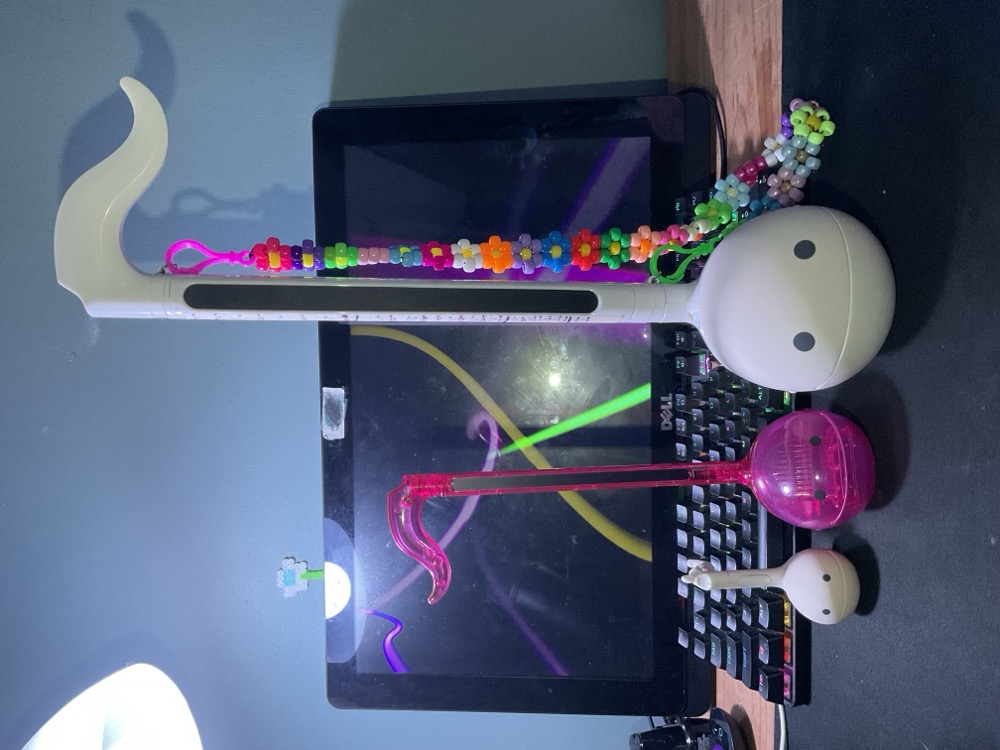
What are otamatones?
Otamatones are Japanese electronic musical instruments created by the art collective Maywa Denki. They are shaped like a quaver (musical note) with a face — the round head contains a speaker and a movable mouth, while the long stem is a touch-sensitive neck that controls the pitch.
The sound is uniquely recognisable: a nasal, expressive, almost human hum produced by a small analogue synthesiser circuit. When you squeeze the head's cheeks, the mouth opens and the note gains vibrato and an open vowel quality — the famous "wah-wah" that makes the otamatone sound like it is actually singing. That combination of visual comedy and genuine playability is what made them go viral across TikTok, YouTube and beyond.
They are manufactured by Cube Works (the commercial arm that produces them) and designed by Nobumichi Tosa of Maywa Denki, who first imagined a singing musical note in the late 2000s. They went on sale in 2009.
How to play them
Playing an otamatone requires no musical background. The basics in three steps:
- Hold the body — grip the round head with your non-dominant hand, thumb and index on the cheeks.
- Slide your finger along the neck — press the neck strip with your dominant hand and slide up for higher notes, down for lower. The pitch is continuous (no frets), like a fretless bass or a theremin.
- Squeeze the cheeks — opening and closing the mouth gives the note its expressive "wah-wah" character and vibrato.
Getting sound out takes seconds. Playing a recognisable melody in tune takes practice, since there are no fret markers — but most people manage a simple song within an hour. Read our full step-by-step in the how to play the otamatone guide.
Models and prices
Not all otamatones are equal. Here are the main models you'll find:
| Model | Size | Sound / extras | Approx. price | Best for |
|---|---|---|---|---|
| Otamatone Deluxe | ~44 cm | Better speaker, longer neck, often headphone output | $50-90 USD | Playing actual melodies / serious starters |
| Otamatone Classic / Sweet | ~27 cm | Basic sound, compact and light | $25-50 USD | Children, gift, first try |
| Otamatone Neo | ~31-35 cm | Updated mid-size model | $40-60 USD | Middle ground size/price |
| Special editions | classic size | Themed designs: Kirby, Ninja, Kabuki, Whale… | $50-100+ USD | Fans and collectors |
The core decision for most buyers is classic (27 cm) vs Deluxe (44 cm): compact and affordable, or large and much easier to tune. If you are unsure, see the detailed breakdown in the best otamatone for beginners guide.
Which to buy
For most people wanting to actually play music: the Otamatone Deluxe. Its 44 cm neck means notes are further apart, making accurate tuning dramatically easier.
For a gift, a child, or a first cheap experiment: the classic. It is affordable, compact, and sounds just as characteristically otamatone as the Deluxe.
For fans and collectors: a themed edition — Kirby, Ninja, Whale — combines the instrument with a favourite character design.
FAQ
What are otamatones?
Japanese electronic toy instruments by Maywa Denki, shaped like a musical note. You slide your finger along the neck to change pitch and squeeze the mouth for vibrato. They went viral for their cartoonish, expressive singing voice.
How much does an otamatone cost?
Classic models: $25-50 USD. Deluxe: $50-90 USD. Themed editions: $50-100+ USD depending on availability.
Which otamatone is best for beginners?
The Otamatone Deluxe for most starters: longer neck = easier tuning. The classic if you want to spend less or it is for a child or gift.
Are otamatones hard to play?
Making sound is instant. Playing melodies in tune takes practice — the neck has no frets, so pitch depends on exact finger position. Most people play recognisable songs within an hour. The Deluxe makes it noticeably easier.
Where to buy?
Amazon is the most convenient option globally. Classic, Deluxe and themed editions. Look for official Maywa Denki / Cube Works listings.