
Quick answer
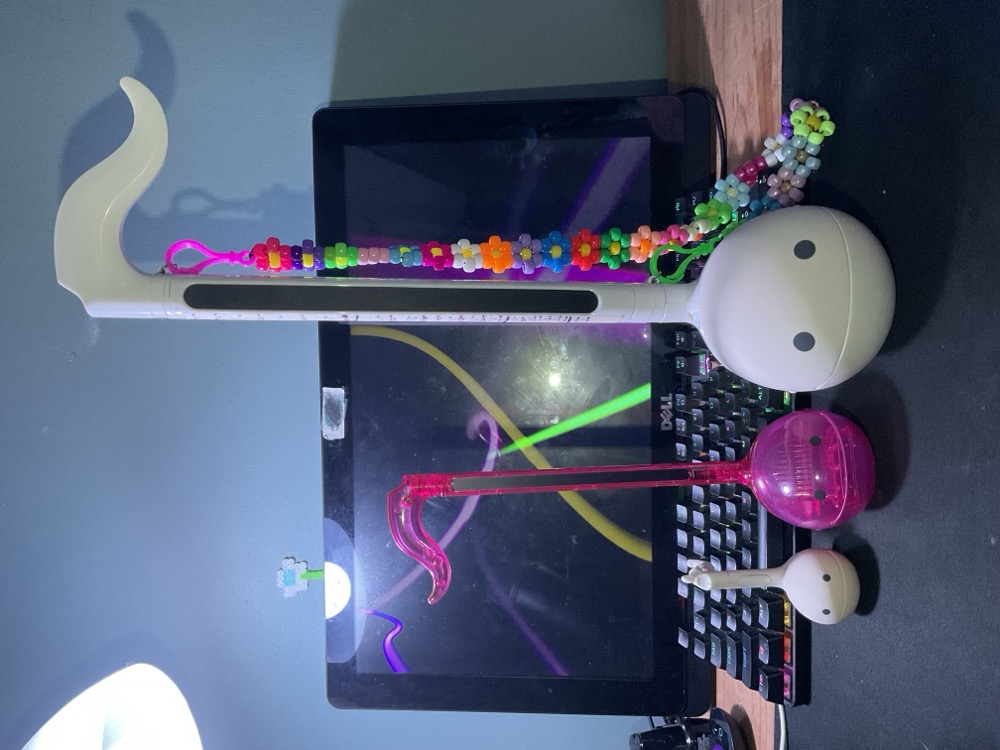
The otamatone is a Japanese electronic musical instrument — an analogue pocket synthesiser — shaped like a musical note (a quaver) with a singing face. It belongs to the electronic instrument family: it is not a string instrument, not a wind instrument and not a percussion instrument. Sound is produced electronically when you touch the neck strip. It was created by the Japanese art collective Maywa Denki and has become globally viral for its cartoonish, expressive voice.
Which instrument family does it belong to?
Many people see the otamatone in a video and ask: "is that a string instrument? A wind instrument?" The answer is neither. It is an electronic instrument, specifically an analogue pocket synthesiser.
- Not a string instrument — it has no strings. The sliding finger gesture resembles a fretless string instrument, but sound comes from electronics, not vibrating strings.
- Not a wind instrument — you never blow into it. Compare this to a melodica or a kazoo, which require breath.
- Not a percussion instrument — you do not strike or hit it like a kalimba or a tongue drum.
- Electronic — it shares its family with synthesisers and, in playing technique, with the theremin (another electronic instrument played without fixed positions).
What makes it fascinating is that it combines the expressive, continuous pitch control of a fretless string instrument with the synthetic, distinctive voice of an analogue electronics circuit — and wraps everything in the shape of a musical note.
Why is it shaped like a musical note?
The otamatone's silhouette mimics a quaver (eighth note): the round body is the note head and houses the singing face with its movable mouth, while the long stem is the touch-sensitive neck where you play. This visual pun — an instrument that looks like musical notation — is core to Maywa Denki's design philosophy: their instruments are art objects that embody their own musical concept.
That instantly recognisable silhouette is also what made the otamatone go viral: it is a musical instrument shaped like a musical note, a visual concept so clear and memorable that it sticks on first sight.
How it works and how it sounds
The mechanism is intuitive:
- Touch neck: slide your finger up (higher note) or down (lower note) along the neck strip. The pitch changes continuously, like a fretless bass or a theremin.
- Mouth/cheeks: squeeze the head to open the mouth — this adds vibrato and expressive colour to the note, giving the instrument its distinctive "wah-wah" singing quality.
- Volume switch: a side switch with volume levels. It runs on batteries.
The result is that nasal, catchy, cartoonishly expressive tone that has conquered the internet. Halfway between someone humming and a retro synthesiser. For step-by-step technique, see our how to play the otamatone guide.
Video: see it in action
The video shows the key gesture: finger sliding along the neck for pitch, and the other hand squeezing the head for vibrato.
The otamatone family
The otamatone is not a single model — there is a whole family with the same electronic mechanism in different sizes and themes:
| Model | What it is | Best for |
|---|---|---|
| Classic otamatone | Standard size, shorter neck | Gift, first try |
| Otamatone Deluxe | Long neck, easier to tune | Playing recognisable melodies |
| Otamatone Melody | Smallest and most portable | Travel, cheap gift |
| Themed editions | Whale, ninja, kabuki, reindeer, Kirby… | Collectors, fans |
All models sound with the same characteristic timbre; what changes is size (which affects ease of tuning) and design. If you are unsure which to buy, see our guide to the best otamatone for beginners.
FAQ
What type of instrument is the otamatone?
An electronic musical instrument — an analogue pocket synthesiser. It produces sound electronically via a touch-sensitive neck. It is not a string, wind or percussion instrument.
Is it a string, wind or electronic instrument?
Electronic. The sliding-finger gesture resembles a fretless string, but there are no strings and no breath: sound comes from an electronic circuit activated by touching the neck strip.
Who invented it?
Maywa Denki, a Japanese art collective founded by Nobumichi Tosa in 1993. The otamatone went on sale in 2009 and became a worldwide viral sensation.
Why is it shaped like a musical note?
It mimics a quaver: the round body is the note head (with the singing face) and the long stem is the playing neck. It is part of Maywa Denki's concept of instruments that look like their own musical notation.
Is it hard to play?
Getting sound is instant. Playing specific notes in tune requires practice, since the neck has no frets or markers. The Deluxe model with its longer neck makes tuning significantly easier.
Where to buy?
Amazon is the most reliable global option: classic, Deluxe and themed editions. Verify the seller lists it as official Maywa Denki / Cube Works merchandise.
Where to buy an otamatone
For availability and convenience, Amazon is the easiest option globally. You will find the classic otamatone, the Deluxe with long neck (the easiest to tune) and themed editions. If you are buying for the first time and want to play melodies, the Deluxe is the safest bet; for a first try or a gift, the classic does the job perfectly.